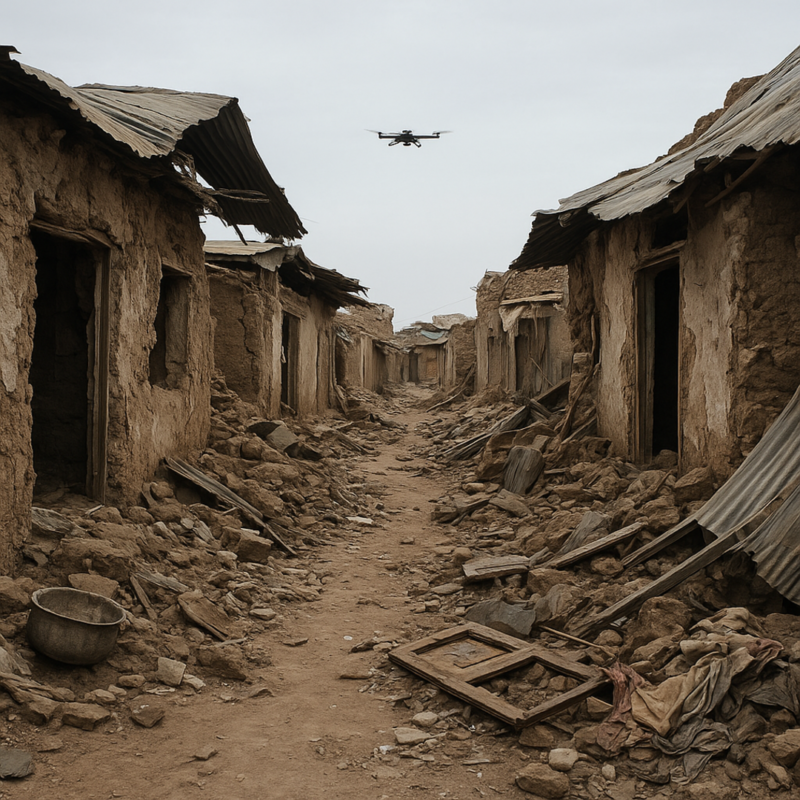
MOGADISHU – The Guardian has published an investigation alleging that a U.S. drone strike carried out on November 15, 2025, in the Jamame district of Lower Juba killed at least 12 civilians, including eight children. According to the newspaper’s report, the strike hit residential homes, with some victims reportedly inside when the attack occurred.
The investigation, which relied on eyewitness accounts and medical records, said one of the destroyed homes belonged to Abdullahi Mohamed Abo Sheikh Ali. Family members told The Guardian that women and children were among those killed when the house was hit. Those named among the victims included Safiya Hassan Abukar, who was pregnant, and four of her children. Local residents interviewed by the newspaper said those killed were civilians and had no involvement in armed conflict.
The report described the incident as one of the deadliest alleged civilian casualty cases linked to U.S. military operations in Somalia in recent years. According to The Guardian, no official public inquiry into the reported deaths has been announced, and U.S. authorities have not publicly acknowledged the casualties described in the report.
Questions Over Targeting and Accountability
The newspaper also raised questions about the intelligence and targeting process behind the strike, saying evidence gathered during its investigation suggested the affected area was a civilian residential neighbourhood. If the findings presented by The Guardian are confirmed, the incident would rank among the most serious allegations of civilian casualties associated with U.S. counterterrorism operations in Somalia in recent years.
Concerns over rising civilian casualties have intensified following a separate airstrike in the Calmiskaad mountains in May 2026, which killed a pregnant woman and her three daughters. In that incident, Somalia’s deputy ambassador to Tanzania called for accountability and warned of possible legal action if regional authorities failed to investigate.
In another case, a Somali elder and respected mediator, Sultan Said Abdisalam, expressed deep sorrow and anger following the death of his close friend in a U.S. drone strike in Lower Shabelle. The elder insisted that the strike had targeted the wrong man, stating: “They say they fight terrorists. But they killed the man fighting to stop terror.”
The Challenge of Civilian Casualties in Drone Warfare
Allegations of civilian deaths remain among the most sensitive issues surrounding drone warfare and counterterrorism operations. Such incidents often draw scrutiny over intelligence gathering, target verification, and compliance with international humanitarian law. The United States has significantly ramped up its aerial campaign in Somalia, with nearly 50 airstrikes conducted in the first quarter of 2026 alone, a massive increase in military actions directed against extremist organisations operating in the Horn of Africa.
The report is likely to increase calls from human rights organisations, local communities, and civil society groups for an independent investigation to establish the facts surrounding the strike and determine whether civilian deaths occurred. For the United States, claims of civilian casualties can complicate counterterrorism partnerships and weaken public support for security operations, particularly in areas where military efforts depend on cooperation with local communities.
Al-Shabaab has previously claimed that U.S. airstrikes killed captured Jubaland troops, though those claims were contradicted by the Federal Government of Somalia, which declared the operation a major victory and reported the deaths of more than 130 Al-Shabaab fighters.
The Need for Independent Investigation
At the same time, the claims outlined in the report are based on journalistic findings and witness accounts. As of now, there has been no publicly released official investigation or response confirming the reported casualty figures. In previous operations, AFRICOM has stated that no civilians were harmed, including a December 2024 airstrike that killed senior Al-Shabaab leader Mohamed Mire.
The case highlights the continuing challenges faced by military forces conducting counterterrorism operations in densely populated areas, where distinguishing between militant targets and civilian populations can have significant humanitarian and political consequences.
Recommended Reading On ftlsomalia.com:
- Airstrike kills woman, daughters in northeastern Somalia amid rising civilian deaths
- Somali Elder Mourns Friend Killed in U.S. Drone Strike, Demands Accountability
- US Has Undertaken over 100 Airstrikes in Somalia Under President Trump
- US Forces Kill Captured Jubaland Troops in Somalia Air Strike, Al-Shabaab Claims
- AFRICOM Confirms Killing Top Al-Shabaab Leader in December 24 Airstrike