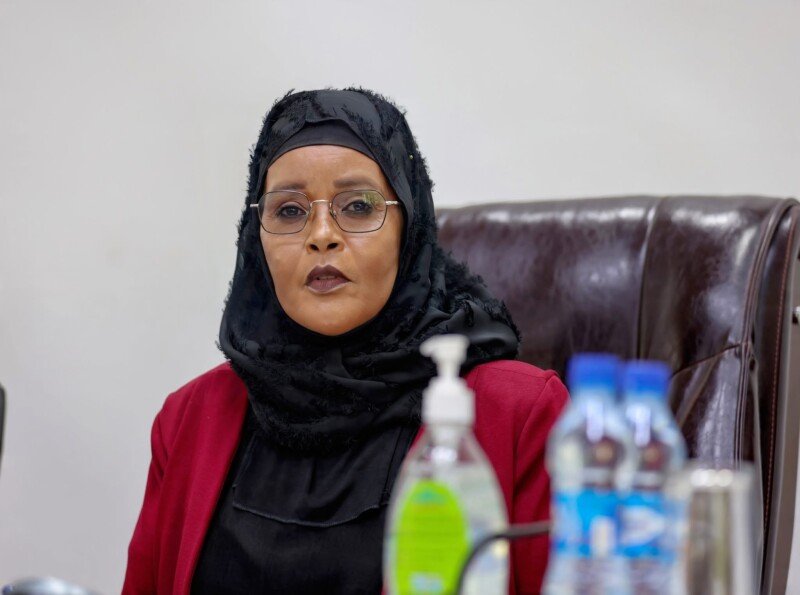
MOGADISHU — The acting Speaker of the House of the People, Sacdiya Yaasin Haaji Samatar, who also serves as the First Deputy Speaker, has appointed a nine-member committee to oversee the election of the next Speaker of the Federal Parliament, according to an official statement issued today.
The committee’s formation comes as the House of the People prepares to fill the vacancy in its leadership, a process that carries significant implications for the balance of power within Somalia’s federal legislature and the broader political landscape. The acting Speaker invoked Articles 87 and 88 of the Federal Constitution, alongside provisions of the House’s internal rules, in authorizing the committee’s establishment.
Committee Composition and Mandate
The election committee comprises nine members of parliament drawn from across the political spectrum. Those appointed include:
- Abdirizak Omar Mohamed
- Abdi Ibrahim Warsame (Qowdhan)
- Jawahir Adaw Abdi
- Abdullahi Hussein Ali (Abdalla)
- Nur Ahmed Diriye
- Mukhtar Mohamed Guded
- Abdirahman Mohamed Sheikh
- Khadra Mohamed Tukale
- Abdikarim Mohamed Diriye
The committee’s mandate is to manage the procedural aspects of the Speaker election, ensuring that the process adheres to constitutional provisions, parliamentary rules, and principles of transparency and accountability. According to the official communication, the committee members have been directed to promptly undertake their responsibilities in accordance with the House’s internal regulations.
Political Context and Significance
The election of a new Speaker comes at a politically charged moment for Somalia’s federal institutions. The parliament has faced persistent challenges in asserting its independence from the executive branch, with critics frequently pointing to the legislature’s limited oversight role and the influence of political factions in shaping parliamentary outcomes.
Acting Speaker Samatar, who has been serving in the role following the previous Speaker’s departure, is the first woman to hold the position in the history of Somalia’s parliament. Her assumption of the acting speakership was itself a milestone, though the path to a permanent Speaker remains contested.
The formation of the election committee represents the first formal step in a process that will test the parliament’s capacity to conduct its internal affairs without external interference. The composition of the committee, which includes both established figures and newer members, suggests an effort to balance representation across parliamentary blocs and clans—a delicate undertaking in Somalia’s political landscape.
Parliamentary elections for leadership positions in Somalia have historically been fraught with political maneuvering, with rival factions often competing vigorously for positions that carry influence over legislative agendas, committee assignments, and institutional resources. The race for the speakership has already drawn significant interest, with State Minister for Interior Saadad Mohamed Nur (Caliyow) resigning from his cabinet post to pursue the position.
The contest for the speakership is expected to be fiercely contested, with Villa Somalia reportedly backing Minister of Ports and Marine Transport Abdulkadir Mohamed Jaamac for the role. The outcome will be a critical indicator of the balance of power within the federal government and the extent of external influence in Somalia’s domestic political affairs.
The political landscape has been marked by tensions between the federal government and opposition factions, with the international community repeatedly urging Somali leaders to resume dialogue and reach a consensus on the way forward.
Critical Note
While the appointment of an election committee is a procedural formality, the credibility of the eventual Speaker election will hinge on the committee’s ability to operate free from political pressure and factional manipulation. The committee’s composition, while balanced in appearance, does not guarantee impartiality in practice. Parliamentary leadership contests in Somalia have historically been influenced by clan calculus (for example, the speaker must be from Rahanweyn clan in line with the 4.5 formula), executive branch interference, and the influence of external actors. The acting Speaker’s assurances of transparency will need to be matched by observable measures to ensure that the election process is genuinely competitive and reflective of parliamentary will rather than predetermined outcomes. Furthermore, the exclusion of certain political voices from the committee process, even if procedurally justified, risks reinforcing perceptions that parliamentary institutions serve the interests of a narrow political elite rather than the broader public. The federal government’s commitment to democratic norms will be measured not by the appointment of committees but by the integrity of the process they oversee.
Recommended Reading On ftlsomalia.com
- Interior State Minister Resigns Amidst Race for Somali Parliament Speaker
- Political Contest for Somalia’s Parliament Speaker: Villa Somalia Backs Abdulkadir Jaamac with Ankara’s Support
- Opposition Confirms Deal with FGS to Resume Dialogue as Ankara’s Neutrality Questioned
- International Community Calls for Somalia to Resume Dialogue Amid Political Standoff
- President Hassan Sheikh Mohamud Praises Aden Madobe Ahead of South West Role
- Madobe Elected South West State President as Sharif Hassan Withdraws Citing Irregularities