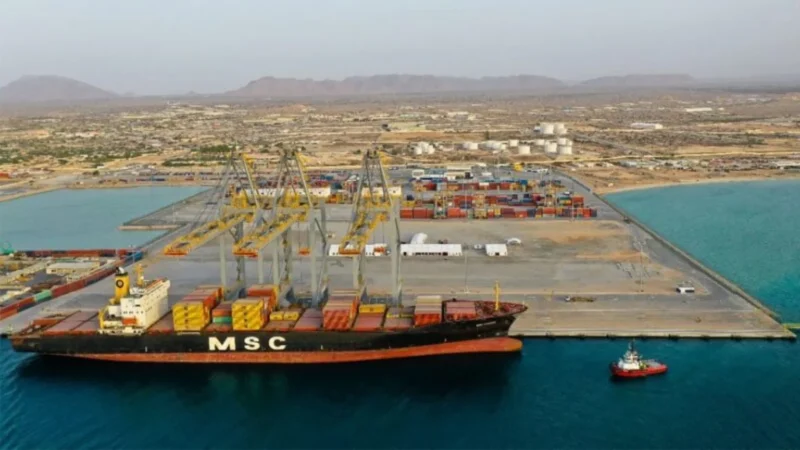
HARGEISA — Global shipping giant MAERSK has announced a temporary suspension of new cargo bookings to and from the Port of Berbera in Somaliland, a move with potential implications for the fast-growing trade corridor linking coastal facilities to Ethiopia’s import-reliant economy. The decision, communicated to customers via a notice dated April 20, took effect immediately, according to the company.
The suspension comes at a time of heightened geopolitical tensions affecting maritime routes in the Red Sea and the Gulf of Aden, though Maersk attributed the decision to unspecified “scheduling changes” without providing further detail at a moment when Berbera has been positioning itself as a rising hub for regional commerce. The Danish carrier stated it would honor all cargo already en route while pausing new bookings.
Regional Trade Disruption
The suspension adds pressure to supply chains in the Horn of Africa, particularly for landlocked Ethiopia, which has increasingly turned to Berbera as an alternative maritime gateway amid efforts to diversify access and decongest traditional ports like Djibouti, which currently handles the majority of Ethiopia’s import-export traffic. The corridor built around Berbera has attracted significant foreign investment in recent years, including substantial DP World-led expansion and port modernization, and has become a strategic target of commercial diplomacy, with officials from the United Kingdom and other partners exploring opportunities to enhance its capacity and efficiency.
The port’s growing relevance was underscored in late 2025, when a senior Ethiopian delegation visited its facilities to explore deepening trade ties despite ongoing maritime security challenges in the Red Sea that have redrawn shipping lines across the region. Yemen’s Houthi movement has warned against what it describes as expanded Israeli engagement in Somaliland, cautioning such developments could threaten Somali sovereignty and the stability of the Red Sea corridor.
Continuity and Alternative Routes
In its customer notice, Maersk acknowledged clients’ reliance on Berbera for local gateway cargo and connectivity to neighboring markets, including Ethiopia. The company emphasized that its services to other regional ports remain available.
“Our continued services to Djibouti, Mogadishu, and Mombasa remain available to support your logistics needs and ensure connectivity across the region,” Maersk stated. The firm encouraged customers needing access to Berbera to explore alternative overland arrangements through those operational ports.
Industry observers expect the suspension to test the resilience of the Berbera trade corridor, which has been promoted as a key component of long-term growth strategies for both Somaliland and Ethiopia. Maersk has not announced when services to Berbera might resume, and customers are being directed to company representatives for individual assistance.
Background: Ethiopia–Somaliland Port Cooperation
The dynamics surrounding Berbera’s development have been shaped by a memorandum of understanding signed in January 2024 between Ethiopia and Somaliland. Under that agreement, Ethiopia was to secure a 12-mile section of Berbera’s coastline for the establishment of a naval base and commercial port, a move that prompted strong objection from the Federal Government of Somalia, which reaffirmed its territorial integrity and initiated diplomatic engagement to address the dispute.
Negotiations in Turkey later produced an agreement between Somalia and Ethiopia to de-escalate tensions, while the legal and political status of the port access arrangement remains subject to ongoing diplomatic processes. The suspension of Maersk services is not directly linked to these political issues, according to available information, but it escalates practical challenges for a project heavily reliant on consistent international shipping connections.