MOGADISHU — The Federal Government of Somalia has issued a firm directive to international oil companies, instructing them to commence exploration activities promptly or face the possibility of license revocation. This decision stems from mounting discontent within the administration regarding the sluggish advancement of the nation’s petroleum industry.
Corporations such as Coastline Exploration, Soma Oil and Gas, and Liberty Petroleum received exploration permissions but have not yet produced substantial outcomes. Authorities report that these enterprises have neglected essential contractual commitments, including seismic surveys, exploratory drilling, and concrete financial investments.
Somalia’s Energy Sector Attracts Global Investment
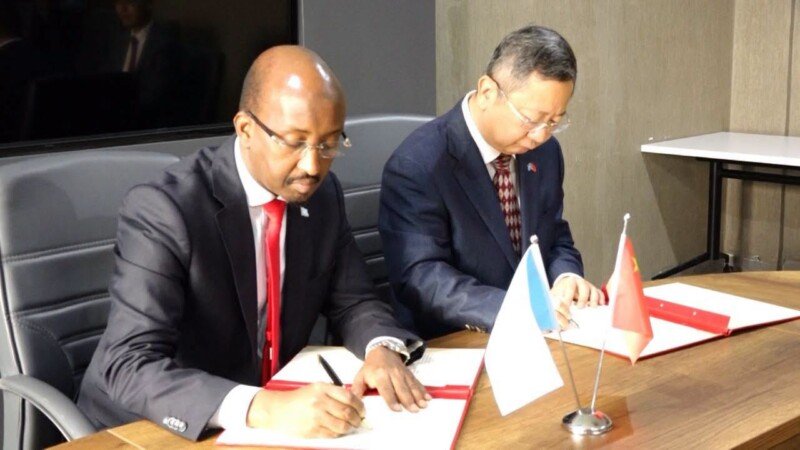
Somalia has been drawing significant international investment into its energy sector, with exploration efforts having started without major security issues Somalia Draws Major Energy Investments as Oil Deals Grow. The government has confirmed that U.S. companies Coastline Exploration and Liberty Petroleum have secured Production Sharing Agreements for a combined ten offshore blocks.
“There are indeed other companies. We have seven blocks under agreement with Coastline Exploration and three with Liberty Petroleum. These agreements are advancing on schedule,” the Minister of Petroleum and Mineral Resources has stated.
The seismic surveys initiated through the Somali-Turkish energy agreement have continued smoothly, and the lack of security incidents has helped ease concerns for investors in Somalia’s offshore areas.
Legal Framework and Oversight Concerns
The petroleum sector has seen a rapid expansion in Production Sharing Agreements in recent years. A May 2025 report by the Financial Governance Committee shows that the Federal Government signed nine new PSAs in 2024 alone with three entities, adding to earlier agreements concluded in 2022. Among the 2024 awardees were Petro-Quest Africa Exploration (affiliated with Liberty Petroleum), GulfSom Energy, and the Turkish Petroleum Corporation, which secured offshore blocks under the Somalia-Türkiye cooperation framework.
However, the committee’s assessment highlights broader risks in the way Somalia has awarded petroleum contracts. All PSAs signed in 2024 were awarded on a sole-source basis, without competitive bidding. Echoing advice from the International Monetary Fund, the committee warns that the absence of competitive benchmarks may expose Somalia to fiscal risks and limit its ability to secure favorable commercial terms.
Some agreements were signed without prior review by the Inter-Ministerial Concessions Coordinating Committee, with review taking place only afterward or remaining pending.
Federal and Regional Cooperation on Resource Management
The government has been working to strengthen cooperation between federal and regional authorities on natural resource management. In January 2026, Somalia’s federal government and four regional state administrations agreed to strengthen cooperation and jointly manage the country’s petroleum and mineral resources Federal, Regional States Agree Joint Oil, Mineral Management.
“We have once again agreed to reject division and take coordinated measures to ensure that petroleum and mineral resources are developed jointly,” the Petroleum Minister stated, adding that all decisions would be guided by the shared interests of the Somali people.
However, Puntland and Jubbaland did not attend the meeting, as both states continue to boycott cooperation with the federal government over broader political disputes, underscoring persistent divisions over resource governance.
Transparency Concerns and Watchdog Warnings
As Somalia enters a new phase in its energy sector, transparency groups have urged the government to take swift action to ensure openness. The drilling vessel Çağrı Bey arrived in Somali waters at the Curad-1 well site, marking a significant shift toward active participation in oil exploration and potential production Shabelle Media.
The Transparency Somalia Initiative has warned that natural resources could pose risks if not managed transparently, noting that benefits from such projects can sometimes be concentrated among a small group rather than reaching the broader population. The watchdog urged the Federal Government to take steps including full disclosure of petroleum agreements, clarification of ownership structures of companies involved in drilling, and the establishment of an open system to manage revenues generated from natural resources.
Turkey’s Deepwater Drilling Operations
The most advanced exploration activities are currently being conducted by Turkey’s state-owned energy company, TPAO, which has begun drilling operations in Somalia’s offshore blocks as part of a strategic exploration and production agreement signed in March 2024. The agreement, which unlocks Somalia’s potential of an estimated 30 billion barrels of oil, has been criticized for being lopsided and non-transparent, with Turkey reportedly allowed to recover up to 90 percent of operational costs before profit sharing.
Proponents argue the deal is a necessary step because Somalia lacks the independent financial capacity, technology, and security infrastructure to undertake the high-cost, ultra-deepwater exploration alone. Drilling a single deep-water oil well is a major capital project often costing between $40 million to more than $100 million per well, a financial burden Somalia cannot bear independently.
Government’s Determination to Advance Petroleum Sector
The government’s ultimatum indicates its determination to advance the petroleum sector and may result in withdrawing permits from companies that underperform, potentially transferring them to entities prepared to initiate operations. The government has declared Somalia now “open for business,” citing enhanced security and modernized regulations that are expected to enable substantial energy and mining ventures to transform the nation’s economy.
The Ministry has detailed fresh initiatives to bolster the mining industry, including a government campaign against illegal mining in areas like Galmudug and Bari. The ministry plans to establish a national laboratory where locals and firms can test mineral samples on-site, curbing fraud and eliminating the need to ship samples overseas.
Risks and Legal Challenges
Specialists observe that while this measure could hasten resource exploitation and attract committed investors, it also threatens to provoke legal conflicts with current contractors should permits be rescinded. This action represents a transformation in Somalia’s methodology from securing agreements to requiring tangible achievements in its energy domain.
It demonstrates increasing pressure to realize economic prospects but also underscores governance difficulties, as implementing contractual terms against international companies may challenge legal frameworks and investor trust. The government has consistently emphasized that responsible resource management and international partnerships are essential to accelerating job creation, infrastructure development, and sustainable growth in Somalia.