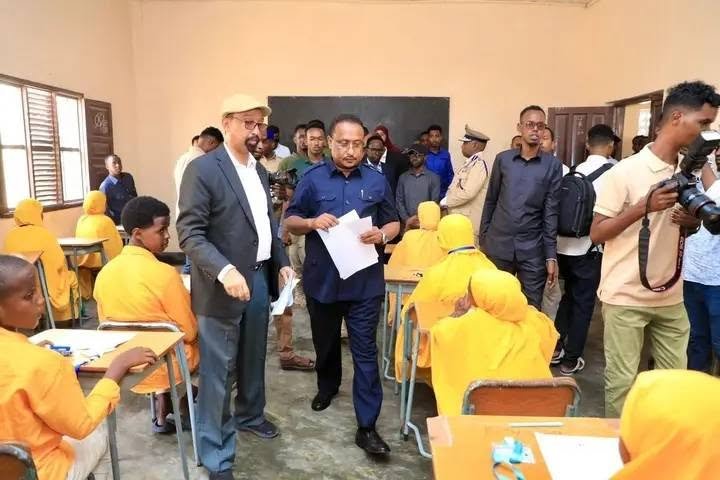
MOGADISHU — The Director General of Education for the Banadir Regional Administration has officially announced the results of the Grade 8 Certificate Examinations for the 2025/2026 academic year, with over 45,000 students sitting for the exams across the region. The exams were held from June 15 to June 18, spanning four consecutive days with students tested in Arabic, Islamic Studies, Mathematics, Technology, English, Science, and Somali Language.
According to the official results, a total of 45,452 students participated in the examinations, comprising 23,351 boys and 20,666 girls. Of these, 44,017 students passed, while 1,435 students failed, representing a failure rate of approximately 3.2 percent. Education officials described the 96.8 percent pass rate as a significant achievement, noting that girls accounted for 45.47 percent of successful candidates.
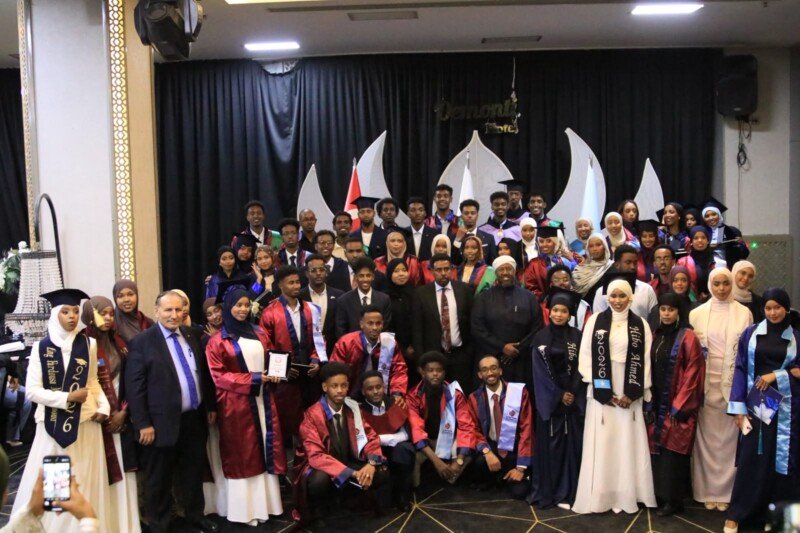
The top position in the Banadir regional exams was secured by Sumayo Hassan Abshir Aadan, followed by Balqiisa Mohamed Omar Mohamed in second place, and Ahmed Abdinasir Abdullahi Abdi in third place. The government has previously awarded scholarships to top-performing female students, reflecting a commitment to promoting gender equity in education.
The Banadir administration has been actively working to reform the education sector, with a recent two-day education transformation conference focusing on improving quality, management, and access to schools across the region.
In a social media post on August 8, 2026, former National Security Advisor Abdisaid Muse Ali (@4rukun) highlighted the broader education and healthcare challenges facing Somalia, specifically in Puntland. “Puntland’s public schools & healthcare system have deteriorated over the past decade,” he wrote. “67% of primary-age children & 85.7% of adolescents are out of school; only 38% of teachers are certified. In health, 90% of districts fall below minimum service standards & only about a third of the population has access to essential health care.”
Ali, who has been in the region for more than 20 years, expressed concern that “senior officials & their families increasingly settle in neighbouring countries while governing Puntland from a distance.” He argued that “when senior government officials invest abroad, educate their children elsewhere & rely on foreign health systems, they have fewer personal incentives to improve the services ordinary citizens depend on.” He called for leaders who “treat public duty as a responsibility, confront failures at home & empower institutions to deliver for the people.”
Education Sector Progress and Challenges
The announcement of the Grade 8 exam results comes amid ongoing efforts to rebuild Somalia’s education sector. The Ministry of Education has listed several key achievements, including the recruitment of 3,000 additional teachers, scholarships for 3,000 girls, the development of the first-ever Higher Education Act, and the expansion of national exams to previously unreached areas.
Somali students have gained global access to internationally recognised qualifications, with the Turkish Maarif Foundation School in Mogadishu launching Oxford International examinations, opening international academic pathways for Somali students.
Girls’ education remains a key priority. The government has announced plans to award scholarships to 3,000 female students who excelled in national exams, promoting gender equity in education.
Preparations for the Grade 8 examinations were completed with enhanced measures to guarantee transparency, fairness, and the integrity of the examination process, with officials emphasising strict anti-cheating measures.
Somaliland President Abdirahman Mohamed Abdillahi Irro has also emphasised the central role of education in national development, launching the 2025 National Certificate Examinations with a call for honesty, discipline, and integrity.
Puntland Acting President Ilyas Osman Lugatoor has inaugurated certificate examinations for thousands of students across the region, underscoring the regional government’s commitment to strengthening the education sector.
Critical Note
While the announcement of the Grade 8 exam results and the recognition of top-performing students are positive developments, they also highlight the significant challenges facing Somalia’s education sector. Despite the participation of over 45,000 students in the exams, millions of children across the country remain out of school due to conflict, displacement, poverty, and lack of infrastructure. The education system continues to face severe resource constraints, with many schools lacking basic facilities, qualified teachers, and learning materials. Furthermore, the quality of education remains a concern, with high dropout rates and low learning outcomes in many parts of the country. The government must prioritise investment in education, ensure that resources reach the most marginalised communities, and address the underlying drivers of educational exclusion. The international community, while supportive of education initiatives, must also increase its financial commitments to ensure that all Somali children have access to quality education.
Recommended Reading On ftlsomalia.com
- Banadir Grade 8 Exams Begin June 15
- Banadir Education Conference Concludes with Reform Pledges
- Somalia’s Education Ministry Lists Key Achievements of 2024
- Somali Students Gain Global Access as Turkish-Backed School Launches Oxford Exams
- 3,000 Female Students to Be Awarded Scholarships
- Somaliland President Launches 2025 National Exams