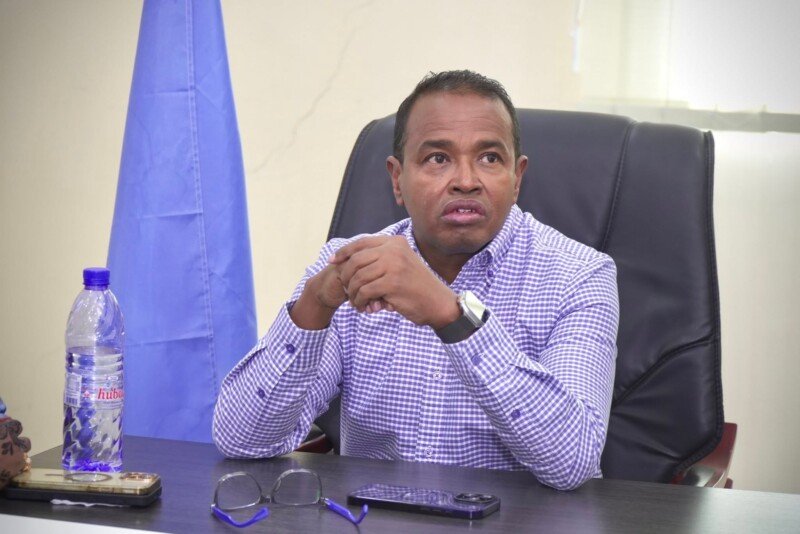
GAROWE – Puntland’s Ministry of Health, in partnership with Population Services International (PSI), has officially launched a digital system to modernise the management of pharmaceutical stocks and medical supplies across the state. The Integrated Pharmaceutical Warehouse Inventory Management System is part of the wider Damal Caafimaad project, a multi‑million‑dollar initiative aimed at expanding essential health services and strengthening health systems in underserved regions.
The launch ceremony in Garowe was attended by Puntland Health Minister Mohamed Abdirahman Mohamed (Faroole), Deputy Health Minister Maryan Osman Ahmed, and State Minister for Health Ali Mohamed Osman. Also present were Abdifitaax Muufo, acting Director of the Health Services Department and head of drug supply, who outlined the stages of the system’s implementation and its importance for managing pharmaceutical stocks and health assets. He expressed gratitude to PSI for its support in introducing the modern system, which replaces older logistics procedures.
Abdiqani Hirsi, PSI’s head in Puntland, said the organisation was pleased to support the rollout and that the system would play a major role in improving medicine management, enhancing the quality of health services, and ensuring that essential drugs consistently reach frontline facilities without interruption. Abdirahman Ibrahim, PSI’s supply chain manager, provided a detailed explanation of how the system works, its various components, and its relevance for improving the management of medicines, medical equipment, and other government health assets.
Real‑Time Tracking and Accountability
“This system marks an important step toward modernising health logistics and ensuring the provision of high‑quality medical services,” Minister Faroole said. “It empowers the Ministry of Health and relevant stakeholders to track our medical assets constantly – including stock levels, usage, distribution networks, and movements – which will significantly enhance accountability, transparency, and the overall quality of healthcare.”
The platform enables health officials to monitor medicine stocks and other health assets in real time across all government facilities. Years of conflict, weak institutions, and logistical challenges have long disrupted the safe storage and distribution of essential supplies in Puntland and the rest of Somalia, frequently leading to shortages of vital drugs and creating openings for counterfeit medication. The automated tracking system is designed to address these vulnerabilities.
The Damal Caafimaad project aims to expand primary healthcare, reduce maternal and child mortality, and reinforce health systems in underserved regions. The new digital inventory system is a direct response to the logistical bottlenecks that have historically hampered the secure distribution of medical supplies.
Puntland’s Broader Health Sector Reforms
The digitisation of the pharmaceutical supply chain is part of a larger push by Puntland authorities to modernise healthcare delivery. Galdogob General Hospital was recently reopened as a modernised facility to serve over half a million people in one of the country’s most underserved regions, supported by the German Federal Ministry for Economic Cooperation and Development through KfW Development Bank.
Puntland has also completed major vaccination campaigns and trained dozens of healthcare workers in child illness management. The new digital system is expected to complement these investments by ensuring that essential medicines and health assets are consistently available where they are needed most.
A Model for National Health Logistics
As Puntland rolls out the digital tracking system, health officials anticipate that the platform could serve as a model for other Somali regions facing similar supply chain challenges. The ability to monitor medical assets in real time is expected to reduce waste, prevent shortages, and improve the overall quality of care in government health facilities.
For local communities, the system represents a tangible step toward a more reliable and accountable health system. For Puntland’s health authorities, it is a strategic investment in the state’s long‑term capacity to deliver essential services without disruption.
Recommended Reading On ftlsomalia.com:
- Health Minister Launches Mid‑Term Review of Damal Caafimaad Project
- Somalia Showcases Health Leadership on Global Stage
- Somalia Seeks New Frontiers in Tech and Pharma Cooperation
- Somalia Reaffirms Digital Commitment at WSIS+20 Roundtable
- Galdogob Hospital Reopens to Serve Over Half a Million in Puntland