MOGADISHU – A wave of violent clashes erupted in Somalia’s capital this past week, leaving a trail of devastation and sparking serious allegations from the country’s opposition leaders. The fighting, which began on Wednesday and persisted through Thursday, resulted in dozens of casualties, though official figures remain disputed.
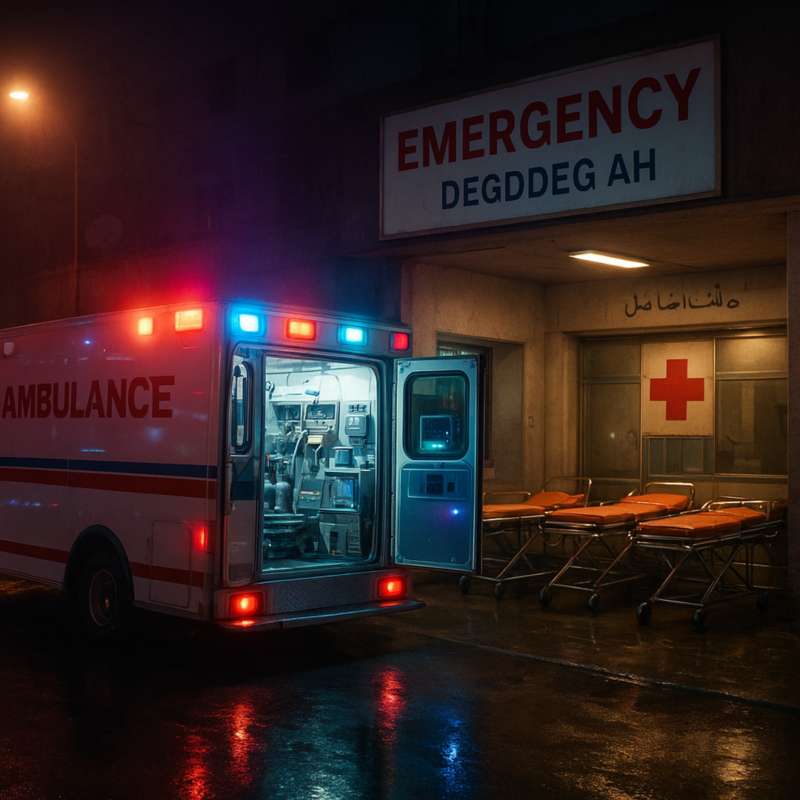
The Federal Government of Somalia’s Ministry of Health and Human Services issued preliminary casualty statistics from the security incidents that took place in Mogadishu on June 3-4, 2026. Based on information gathered from hospitals and healthcare facilities throughout the capital that treated victims of these incidents, a total of 56 casualties were documented, consisting of 55 injured individuals and 1 fatality.
The ministry expressed condolences to the family and loved ones of the deceased and wished a speedy recovery to all injured individuals. The ministry also praised healthcare workers, emergency response teams, and medical institutions for their dedication in delivering prompt treatment and preserving lives during these incidents.
Casualty Figures Disputed
However, the official figures have been met with skepticism. Eyewitnesses on the ground have reported at least four deaths resulting from the clashes, a significantly higher number than the single fatality acknowledged by the Ministry of Health. The discrepancy between official accounts and on-the-ground observations has raised questions about the accuracy of the government’s reporting.
FTL’s previous reporting on the political crisis noted that nearly two dozen deaths had occurred, with approximately 200 people wounded. The disparity between these figures and the Ministry of Health’s official statement highlights the challenge of verifying casualty numbers during active security operations.
The Ministry of Health reiterated its commitment to gathering, verifying, and sharing accurate and reliable information, especially during emergencies and situations that impact public health. Additionally, the ministry called upon government agencies, media organizations, and other stakeholders to exercise responsibility and care when reporting on fatalities, injuries, and emergency scenarios, emphasizing the necessity of ensuring all public information is factual, verified, and accurately represents the actual conditions.
Allegations of Drone Use Against Opposition
Amid the chaos, prominent opposition figures have accused the federal government of deploying drones against them. Former Prime Minister Hassan Ali Khaire reported that federal government troops launched an attack on a compound where he was meeting with traditional leaders in the Howlwadaag district. Following the initial assault, his forces engaged in fierce gun battles with troops loyal to the incumbent president. Khaire alleged that, alongside mortar fire, drones operated by the Federal Government of Somalia were used in the attack. He stated the attack was a deliberate attempt to kill him, along with 60 clan leaders and intellectuals who were gathered to discuss methods for preventing further violence and establishing a framework for mediation to resolve the ongoing political stalemate. Khaire did not specifically name Turkey as the source of the drones, only that all FGS drones were used against him.
Turkey’s Mediation Efforts and MIT Arrival
Turkey has increased its diplomatic efforts to alleviate Somalia’s growing political tensions, as a Turkish delegation has conducted separate meetings in Mogadishu with federal government officials and opposition leaders following recent clashes in the capital. The delegation, reported to consist of diplomats and security officials, forms part of Ankara’s initiatives to foster dialogue between Somalia’s federal government and opposition politicians embroiled in disagreements about electoral arrangements, constitutional reforms, and the nation’s political trajectory.
Unconfirmed reports from sources at Mogadishu’s Aden Adde International Airport suggest that the Head of Turkey’s National Intelligence Organization (MIT) arrived in the Somali capital on the morning of Thursday, June 4. The reports, which remain unverified by official sources on either side, fueled speculation about Ankara’s eagerness to broker a ceasefire between the federal government and opposition forces. If confirmed, the arrival of the MIT chief would represent a significant escalation in Turkey’s diplomatic engagement, moving beyond back-channel communications to direct, on-the-ground mediation.
Diplomatic sources with knowledge of the discussions indicated that Turkey’s National Intelligence Organization (MIT) personnel participated in the talks, though neither the Turkish government nor Somali officials have publicly verified the delegation’s composition or the specifics of the meetings. Sources involved in the negotiations revealed that Turkish officials have met with former President Sharif Sheikh Ahmed at his residence in the capital as part of attempts to mitigate tensions and promote direct political discussions between the opposing parties.
Opposition’s Careful Stance Toward Turkey
Despite the allegations against the federal government, opposition leaders have been careful not to alienate Turkey, which remains one of Somalia’s most influential international partners. According to Abdi Aynte, the Turkish ambassador has met and continues to meet with opposition leaders. Members of the opposition have reportedly asked Turkey to remain neutral in the conflict and to stay on an apolitical track when it comes to Somalia.
This cautious approach reflects the recognition within opposition circles that Turkey has invested heavily in Somalia’s infrastructure, humanitarian aid, state-building programs, and security sector training over the past decade. Ankara’s enduring relationships with both the federal government and multiple political actors position it uniquely as a potential mediator. Opposition figures have privately expressed hope that Turkey can exert pressure on President Mohamud to return to negotiations without taking sides.
Destroyed Military Vehicles Displayed
The severity of the clashes was evidenced on Thursday when opposition forces displayed Turkish-donated armored Somali army vehicles that had been destroyed during the overnight fighting on Wednesday. Videos circulating on social media appeared to show damaged military equipment and burned vehicles following the confrontation.
Assassination Attempt Allegations During Mediated Withdrawal
Yusuf Gama’adiid, a spokesman for the Himilo party of former President Sharif Sheikh Ahmed, described an incident on Friday involving former President Sharif Sheikh Ahmed. According to the spokesman, as Ahmed was vacating his base in the Marinayo neighborhood under the auspices of international diplomatic mediation, his convoy was stopped by federal government troops. Gama’adiid characterized this encounter as a targeted assassination attempt, suggesting that foreign governments were involved in the coordination of the act, with specific accusations directed toward Ankara.
Political Context of the Clashes
The violence occurred amid escalating tensions regarding Somalia’s electoral process, constitutional amendments, and the nation’s political direction. Opposition leaders have drawn sharp battle lines against what they describe as “illegitimate term extensions” and “disputed elections,” warning the government not to push the country into another cycle of political turmoil.
The federal government has previously maintained that ongoing security operations in Mogadishu are aimed at maintaining public order and addressing security threats, while opposition figures argue that the actions violate previous understandings intended to reduce tensions between political actors in the capital.
Recommended Reading On ftlsomalia.com: