MOGADISHU — President Hassan Sheikh Mohamud has issued what appeared to be a warning of potential military action against Jubaland and Puntland regional states, stating that no area of the country is beyond the national army’s capabilities.
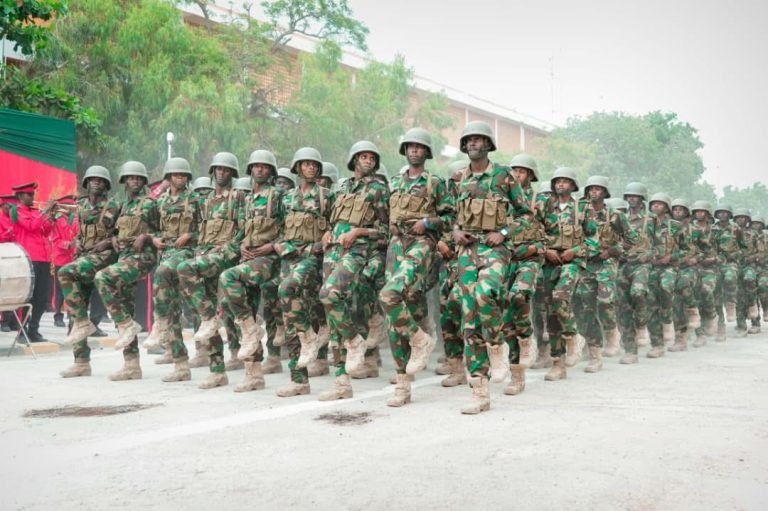
Addressing an event commemorating the 66th anniversary of the Somali National Army, President Mohamud indicated that government forces are ready to conduct special operations anywhere in Somalia when authorized by federal command. His comments were largely seen as a message to regional authorities amid escalating tensions.
Defense Minister Threatens Military Action
The president’s remarks were echoed by Defense Minister Ahmed Moallim Fiqi, who warned that the federal government could use military force against federal member states opposing national plans. Fiqi criticized leaders of some regional administrations for what he described as hostility toward the deployment of national forces.
“We have reached a point where grown men, leaders of administrations, claim they are being attacked when they see the Somali military. That is a mindset we must move past,” Fiqi said, adding that the army’s presence should be welcomed across Somalia.
“The federal system does not mean a regional state can say, ‘No one can enter,’ or that its doors are closed. There is no greater crime than a Somali leader announcing they have cut ties with the Somali government,” the minister stated, warning that the military would intervene if necessary.
Recent Federal Intervention in South West State
The president’s remarks follow recent incidents where federal troops entered Baidoa, removing South West State President Abdiasis Laftagareen on March 30. Laftagareen, who had been re-elected only two days earlier by the state’s House of Representatives, resigned and later fled to Nairobi, Kenya.
Laftagareen’s resignation followed intense, closed-door negotiations with federal officials, who granted him permission to travel abroad without legal restrictions before he boarded a flight to Nairobi.
The federal government subsequently appointed Prime Minister Hamza Abdi Barre’s deputy, Jibril Abdirashid Haji Abdi, as interim leader of South West State, tasking him with managing a political transition and organizing nationwide elections.
Puntland’s Response and Warnings
President Mohamud’s statement comes after Puntland President Said Abdullahi Deni directed regional forces to remain vigilant against possible federal military intervention. Deni warned that the South West State operation might be repeated in other regions, accusing the federal government of attempting to replace Somalia’s federal system with a centralized structure.
Speaking to regional security officials in Qardho, Deni cautioned that developments in other federal member states could potentially unfold in Puntland, urging security personnel to make all necessary preparations for such an eventuality.
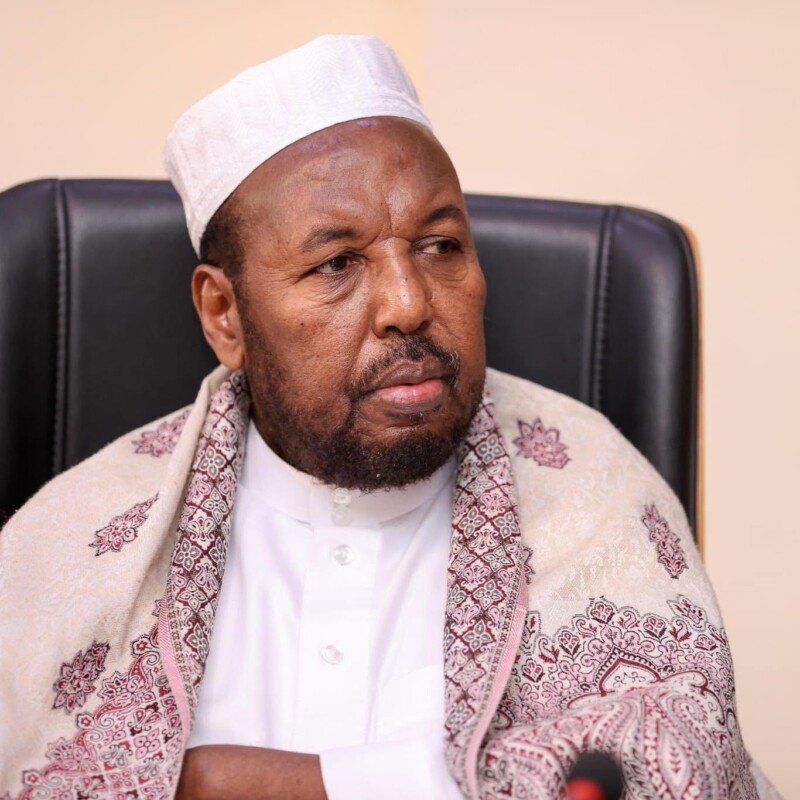
“The rhetoric from Ali Wajiis, which I suspect mirrors President Hassan Sheikh’s own stance, suggests placing Puntland’s territories under direct, region-by-region federal authority,” Deni said, citing recent remarks by a pro-government religious scholar who serves as a presidential adviser.
Deni further accused President Mohamud of attempting to consolidate power and dismantle the federal system that has governed Somalia for more than two decades.
Jubaland’s Position
Jubaland President Ahmed Mohamed Madobe has also expressed wariness of federal forces. Mogadishu had previously attempted to hive off the Gedo region to establish a “New Jubaland administration” to challenge Kismayo, the state’s interim capital. A previous attempt by federal forces to remove Madobe from power in December 2025 failed, with troops deployed to Ras Kamboni in Lower Jubba region unable to unseat him.
Constitutional Crisis and Electoral Disputes
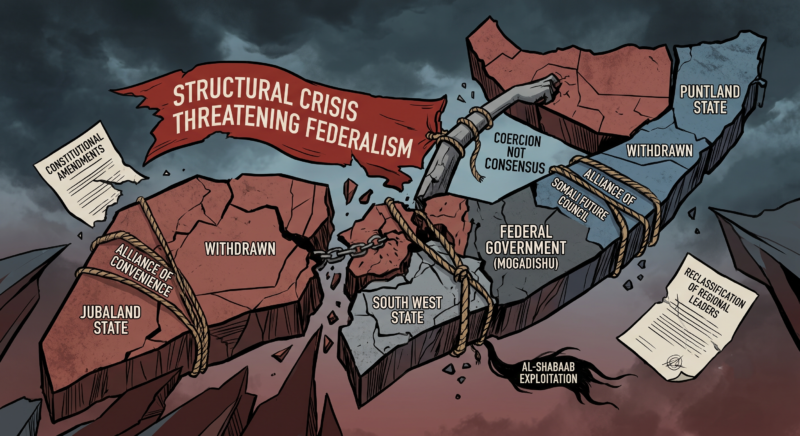
The escalating tensions are rooted in broader constitutional disputes. In March, Somalia approved changes to the constitution and extended the term of the current federal administration by one year to allow time to prepare for universal suffrage. However, those changes are opposed in Jubaland, South West, and Puntland, as well as by various senior political figures.
Puntland Vice President Ilyas Osman Lugatoor has accused Villa Somalia of utilizing substantial resources to destabilize the region during the final months of the current administration’s term.
“Hassan Sheikh Mohamud, who has roughly one hundred and ten days remaining in his term, is engaged in destructive activities,” Vice President Lugatoor stated. “Consequently, we must defend ourselves.”
International Concerns and Regional Stability
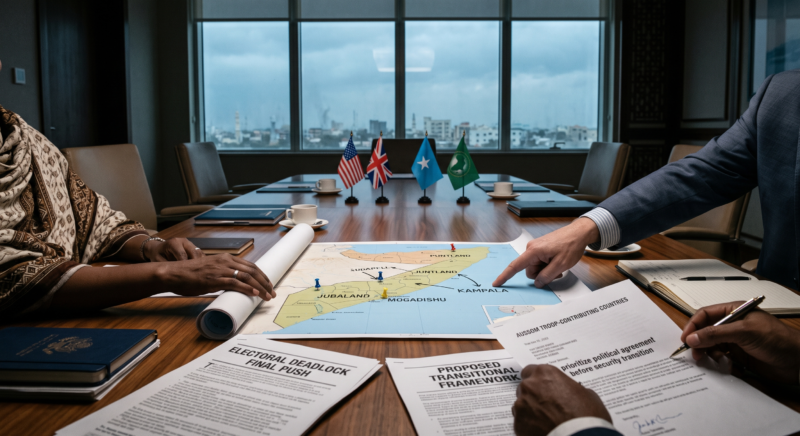
The growing divisions between Mogadishu and regional administrations have sparked new concerns about the stability of the nation’s fragile federal framework. The dispute comes ahead of a highly contentious national election due this year, with regional leaders and opposition groups concerned that President Mohamud could rig the electoral process.
Somalia’s international partners have consistently urged all stakeholders to redouble their efforts to build consensus through an inclusive process, warning that further fragmentation could undermine years of state-building progress.
As one observer noted, there are only days left until May 15, the date President Mohamud was re-elected to the presidency in 2022. If using old laws, a new election should happen before then. If using new laws, elections will not happen until next year. This legal ambiguity only deepens the political crisis facing the nation.
Federalism Under Pressure
The escalating confrontation highlights the fragile nature of Somalia’s federal compact, established in the 2012 Provisional Constitution. Political disagreements have intensified across the country, with ongoing division and persistent disputes reinforcing concerns among many Somalis who doubt the federal system’s suitability for the nation.
As the federal government pushes for greater centralization, regional administrations in Puntland and Jubaland continue to position themselves as defenders of the federal principle, insisting that Somalia’s unity must be built on mutual consent rather than imposed authority. The coming weeks will be critical in determining whether dialogue or further confrontation defines Somalia’s political future.