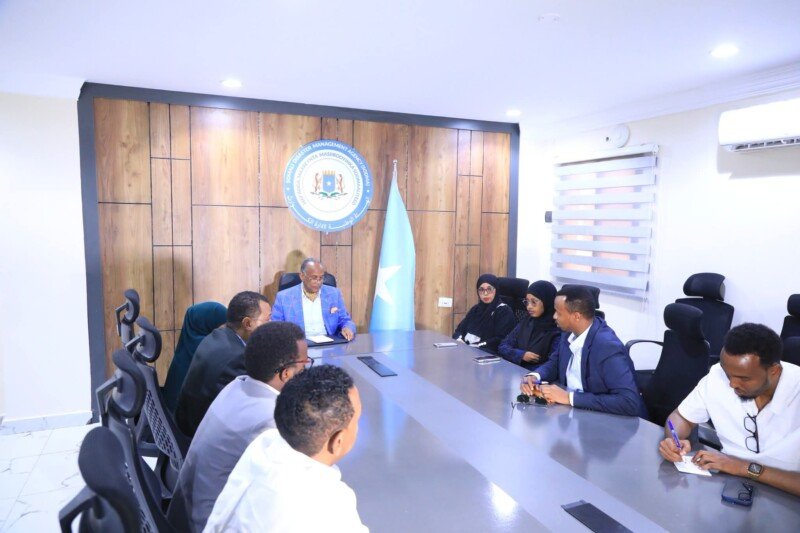
MOGADISHU – The Somali Disaster Management Agency’s Deputy Commissioner, Dr. Ahmed Abdi Adan, today convened a consultative meeting in Mogadishu regarding the creation of Somalia’s National Disaster Risk Management Fund (NDRMF). The event brought together delegates from government bodies, Federal Member States, international partners, local entities, and civil society representatives.
Attendees examined the planned framework of the fund and its function in enhancing Somalia’s capabilities for disaster prevention, preparedness, and response, while providing input to ensure successful deployment and long-term viability. Dr. Ahmed Abdi Adan highlighted the significance of cooperative engagement among all parties to create a robust financial system that aids disaster risk management and resilience initiatives nationwide.
SoDMA Commissioner Mahamud Moalim Abdulle has previously urged international partners to direct all future support through the National Disaster Risk Management Fund, noting that centralizing resources through this specific financial vehicle would significantly enhance national capabilities, ensure transparent resource allocation, and decisively boost Somalia’s sovereign effectiveness in managing future humanitarian crises.
World Bank-Backed Catastrophe DDO Project
SoDMA has launched the World Bank-supported Catastrophe Deferred Drawdown Option (Cat DDO) project, a key step toward strengthening the nation’s ability to respond to natural and climate-induced disasters. The Cat DDO mechanism aims to provide the government with rapid financial access in the event of a disaster, allowing immediate action to protect lives and livelihoods while long-term recovery plans are put in motion.
The project forms part of a broader national strategy to embed disaster risk management into Somalia’s economic and development agenda. By improving coordination between government institutions and regional states, officials hope to reduce the social and economic toll of recurring crises.
Somalia’s Disaster Response Systems Strengthened
Commissioner Abdulle has affirmed that Somalia has successfully transitioned from foundational planning discussions to establishing robust, highly functional disaster response mechanisms across the country. Addressing the nation’s evolving disaster management strategy, he underscored the critical necessity of enhanced institutional frameworks, pointing out that Somalia continuously confronts numerous overlapping obstacles, including prolonged regional droughts, localized security conflicts, and escalating climate effects.
The Commissioner strongly stressed that postponing disaster interventions is no longer an option, as delays inevitably result in devastating humanitarian and economic repercussions. The recently implemented National Disaster Management Policy has officially acknowledged the Social Disaster Response System (SRSP) as an integral, permanent element of Somalia’s overarching national disaster response structure.
International Partnerships for Disaster Preparedness
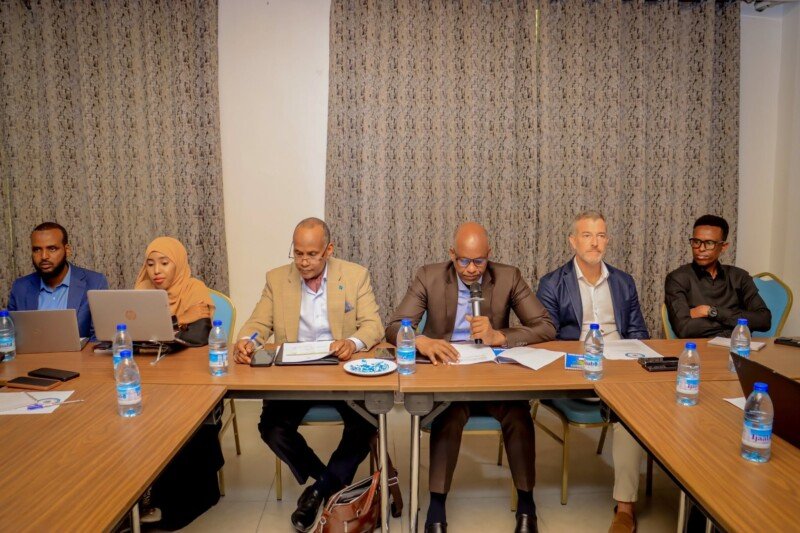
Officials from SoDMA, Federal Member State ministries for Humanitarian Affairs and Disaster Management, and the Banadir Regional Administration convened in Mogadishu for a workshop on the Tri-Part Framework to enhance disaster management coordination nationwide. The event, organized by SoDMA with assistance from the World Food Programme (WFP) Somalia, emphasized improving collaboration, coordinating humanitarian operations, and strengthening disaster preparedness and response mechanisms.
Attendees praised SoDMA’s ongoing initiatives to advance disaster management in Somalia, noting the forum’s role in fostering better cooperation and alignment among humanitarian response institutions.
SoDMA and Mogadishu University co-organized the second annual Somalia Disaster Resilience Conference, focusing on long-term resilience strategies—moving beyond emergency aid toward building sustainable systems that protect vulnerable communities before disaster strikes. The conference aimed to accelerate coordination and unlock new partnerships, seeking to shift the national mindset from crisis survival to resilience building.
Climate Resilience and Livelihood Support Initiatives
The Federal Ministry of Livestock, Forestry and Range has officially launched the Activating Climate Resilient Agricultural Livelihoods in Somalia (ACALS) project, funded by the African Development Bank (AfDB) and implemented jointly by WFP and UNOPS. The initiative aims to strengthen resilience and empower 30,000 people across Hirshabelle and Puntland states through restored agricultural systems, climate-adapted infrastructure, and anticipatory action.
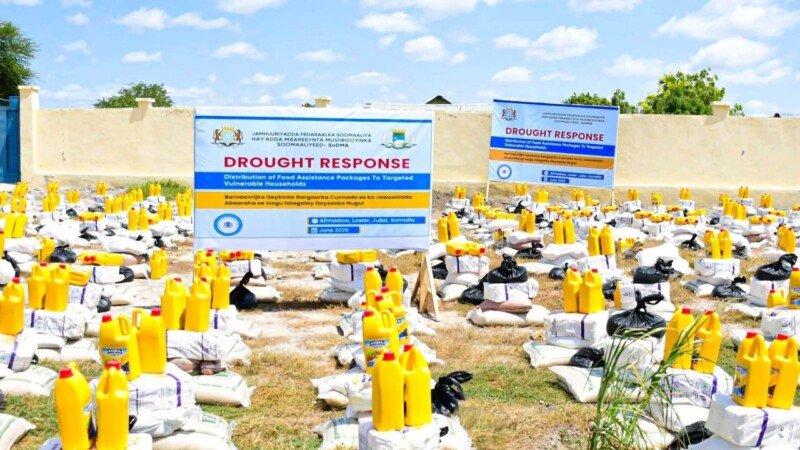
The federal government of Somalia has successfully delivered $3.88 million in targeted drought insurance payouts to pastoralist communities through an innovative index-based livestock Takaful program supported by the Horn of Africa DRIVE initiative, providing early financial support to vulnerable families long before drought conditions intensify into a catastrophic crisis.
Way Forward for the National Disaster Risk Management Fund
The consultative meeting on the NDRMF represents a significant step forward in Somalia’s efforts to build a more coordinated and resilient disaster management system. By bringing together federal and regional stakeholders with international partners, SoDMA continues to strengthen the country’s capacity to prepare for, respond to, and recover from natural disasters and humanitarian emergencies.
The National Disaster Risk Management Fund is expected to serve as a central financial mechanism for channeling international support, ensuring transparent resource allocation, and enhancing Somalia’s sovereign effectiveness in managing future humanitarian crises.
Recommended Reading On ftlsomalia.com:
- Somalia Building Stronger Disaster Response Systems, SoDMA Chief States
- Somalia Launches World Bank-Backed Project to Bolster Disaster Preparedness
- Workshop Strengthens National Disaster Management in Somalia
- Somalia Gears Up for Second Disaster Resilience Conference
- Somalia’s Livestock Ministry Launches ACALS Climate Resilience Project