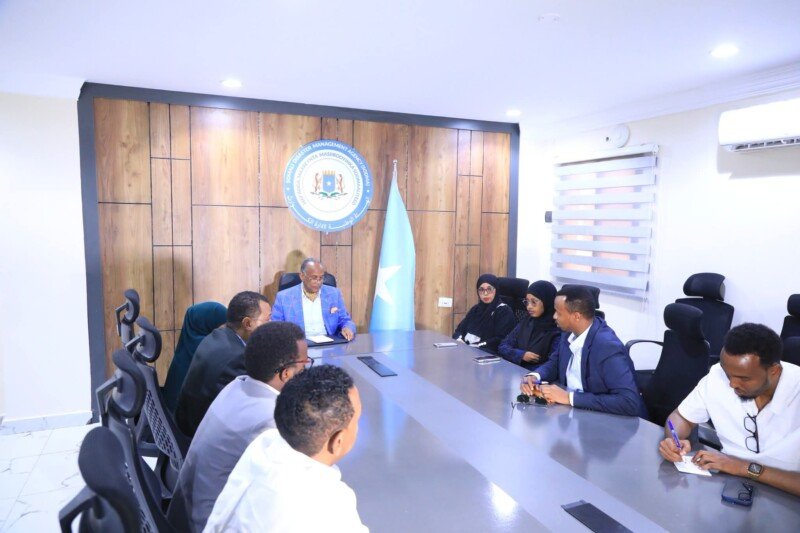
MOGADISHU – The Somali Disaster Management Agency (SoDMA) has convened a meeting with the country’s health sector, including both public and private healthcare providers, to strengthen preparedness for the health impacts of the forecasted Super El Niño rains, which threaten to trigger severe flooding across parts of the country.
The meeting, chaired by SoDMA Project Director Dr. Ismail Jimcale, focused on enhancing coordination and establishing a unified framework for delivering emergency health responses to communities expected to be affected by the floods. Jimcale said the meeting was critical for strengthening coordination among health actors and preparing for the health impacts of the anticipated floods.
A Familiar Crisis, A Familiar Response
The meeting is part of a series of consultations SoDMA is holding to accelerate preparedness for the Super El Niño, as the agency seeks to strengthen coordination with relevant stakeholders to mitigate the risks. The Cabinet has endorsed a national El Niño preparedness plan as the country faces the threat of severe flooding, displacement, and disruption to agriculture and food security. SoDMA and UN partners have previously called for urgent action as Somalia faces the convergence of El Niño risks and severe food insecurity. Prime Minister Hamza Abdi Barre has visited SoDMA headquarters to review El Niño preparedness, receiving briefings on measures already in place.
Yet the rhythm of Somalia’s climate response has become painfully predictable: warnings are issued, meetings are held, plans are endorsed, and when the rains come, communities are once again submerged, displaced, and left to depend on emergency aid. The Super El Niño forecast is not an aberration but part of a pattern that has seen Somalia lurch from one climate crisis to the next, with little evidence of a sustained break in the cycle.
The Scale of the Threat
The health sector meeting underscores the recognition that flooding brings not only displacement but also outbreaks of waterborne diseases, disruption of health services, and increased malnutrition. The El Niño floods in Somalia have had a devastating impact, leaving 905,000 children without access to education and damaging over 127 schools. The health consequences of such displacement are severe, with contaminated water sources and overcrowded shelters creating conditions for disease outbreaks.
Somalia’s health system, already fragile and underfunded, is ill-equipped to absorb the shock of a major flood event. An emergency committee convened at SoDMA headquarters to enhance the country’s emergency response capabilities, but the gap between planning and execution remains wide. The agency has signed agreements to improve access to essential healthcare resources during emergencies, and SoDMA has previously dispatched humanitarian aid including food, medicine, and tents to affected regions. Yet these efforts have consistently fallen short of the need.
A System Under Strain
SoDMA has been working to institutionalize disaster preparedness after decades of reactive crisis management. The agency has pushed for tech-driven early warning systems to protect communities from recurring natural disasters, and has launched a World Bank-backed project to bolster disaster preparedness. But these initiatives, while welcome, are still in their infancy. The gap between the aspiration of proactive resilience and the reality of chronic underfunding remains vast.
The recurring nature of these disasters, droughts, floods, and the El Niño cycle, raises uncomfortable questions about whether Somalia’s approach to climate resilience is genuinely breaking new ground or merely refining a system that has proven inadequate for decades. The Super El Niño is coming, as it always does. The question is not whether Somalia will be affected, but whether this time the response will be different.
Way Forward
The meeting between SoDMA and the health sector is a necessary step, but it is far from sufficient. Without sustained investment in early warning systems, health infrastructure, and community-level preparedness, the cycle of crisis and response will continue. Somalia’s disaster management system has made progress, but the scale of the challenge far exceeds the capacity of any single agency. The Super El Niño is a test of whether Somalia can finally move from rhetoric to resilience.
Recommended Reading On ftlsomalia.com
- Cabinet Endorses National El Niño Preparedness Plan as Super El Niño Threat Looms
- SoDMA and UN Call for Urgent Action as Somalia Faces El Niño and Severe Food Insecurity
- Barre Visits SoDMA Headquarters to Evaluate El Niño Preparedness
- Somalia’s Disaster Agency Pushes for Tech-Driven Early Warning Systems
- Somalia Launches World Bank-Backed Project to Bolster Disaster Preparedness
- El Niño Rains Damaged over 127 Schools in Somalia