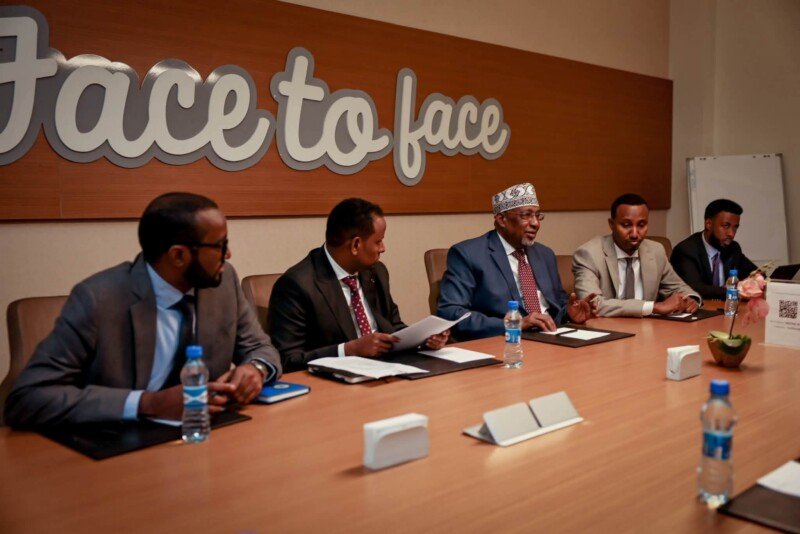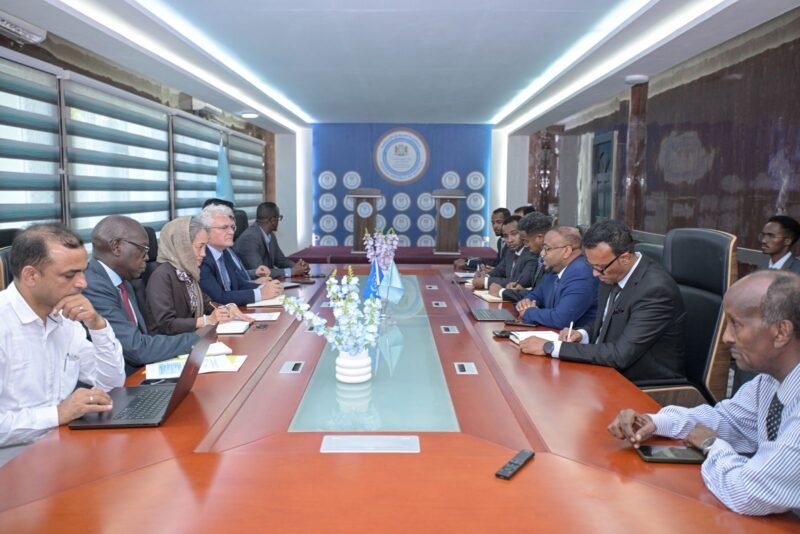
MOGADISHU: The Federal Government of Somalia is enhancing its strategic collaboration with the United Nations Development Programme (UNDP) following a high-level meeting in the capital. The Permanent Secretary of the Ministry of Foreign Affairs and International Cooperation, Hamza Haadow, welcomed the UN Assistant Secretary-General and Director of the Crisis Bureau at UNDP, Shoko Noda, during her week-long visit to Mogadishu.
The talks centered on expanding cooperation between the Ministry and UNDP in line with Somalia’s national priorities, covering development, election preparedness, and humanitarian response. The UN leadership praised Somalia’s increasing influence at the United Nations Security Council and its recent membership in the East African Community (EAC), recognizing these as important achievements in the nation’s international relations. Both parties also emphasized the critical need to tackle internal displacement and persistent drought conditions, committing to intensify government-led collaborative efforts to assist vulnerable communities and build resilience nationwide.
Somalia’s Rising International Profile
The UN’s recognition of Somalia’s diplomatic achievements comes as the country continues to make significant strides on the global stage. Somalia formally assumed the rotating presidency of the United Nations Security Council for January 2026, a historic milestone that signaled Mogadishu’s full reintegration into global governance. The country secured a non-permanent seat on the Council for the 2024-2026 term, marking its return to the body after decades of absence and providing a platform to shape international peace and security discussions.
Somalia formally became the eighth member of the East African Community in March 2024, a significant step in its diplomatic and economic trajectory. Since then, the government has prioritized harmonizing policies with the bloc, opening new opportunities for investment, trade, and regional partnerships. The Federal Government has also secured approval to issue the East African Community passport, a pivotal advancement in regional integration and diplomatic standing.
UNDP Partnership and Development Priorities
The meeting with UNDP builds on an existing framework of cooperation. In November 2025, the Federal Government formalized a major partnership with UNDP to accelerate inclusive economic growth, foster entrepreneurship, and create opportunities for young Somalis. The agreement focuses on job creation, small business development, and sustainable livelihood projects aimed at reducing dependence on aid while encouraging self-reliance. UNDP Somalia has also been conducting inclusive consultations to shape its Country Programme Document for 2026-2030, aligning future priorities with Somalia’s national development agenda and Vision 2060.
Humanitarian Challenges: Displacement and Drought
The discussions also addressed the pressing humanitarian challenges facing the country. The United Nations has requested $852 million to address urgent humanitarian needs, as the combined effects of conflict and climate shocks have triggered substantial population displacement. Throughout 2025, around 680,000 individuals were compelled to abandon their residences, raising the total number of internally displaced persons (IDPs) to 3.3 million. A drought assessment team led by the Somali Disaster Management Agency (SoDMA) recently visited IDP settlements near Kismayo to evaluate living conditions and humanitarian difficulties confronting displaced communities as the country continues to confront extended drought conditions.
Permanent Secretary Hamza Haadow has previously represented Somalia at international forums, including the African Union Extraordinary Summit on the Post-Malabo CAADP Agenda in Kampala, underscoring the government’s commitment to addressing key challenges in agriculture and food security. The latest engagement with UNDP reinforces the Federal Government’s focus on sustainable solutions to displacement and climate resilience, aligning with broader state-building and recovery efforts.