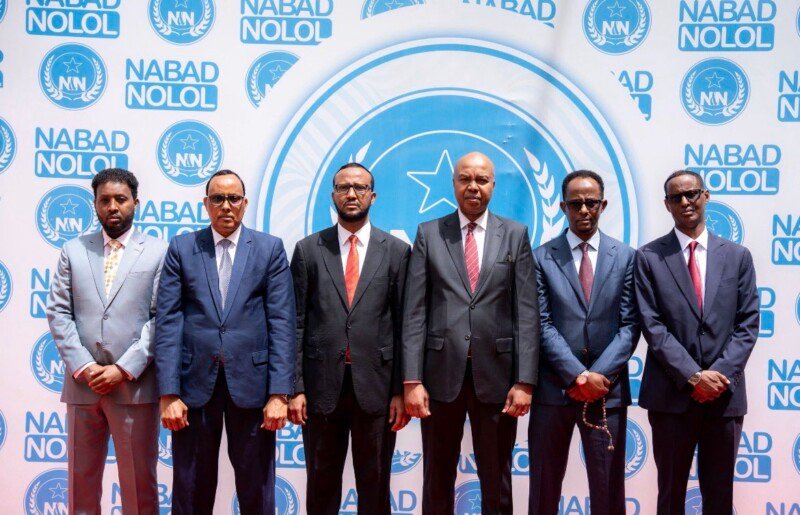
MOGADISHU – The Nabad iyo Nolol (Peace and Life) political party, led by former President Mohamed Abdullahi Farmaajo, has firmly rejected calls for Somalia to return to a transitional system of government, warning that such a move would undermine the country’s hard-won political progress and fail to provide a lasting solution to its constitutional crisis.
Former Foreign Minister Mohamed Abdirisaq, a senior member of the party, told local media that the proposal for a new transitional administration lacks a long-term vision and risks reversing the gains made since Somalia emerged from decades of transitional governance. “Returning to the transitional system would be a political setback, not a lasting solution to the challenges,” Abdirisaq said.
A Direct Challenge to the Somali Future Council
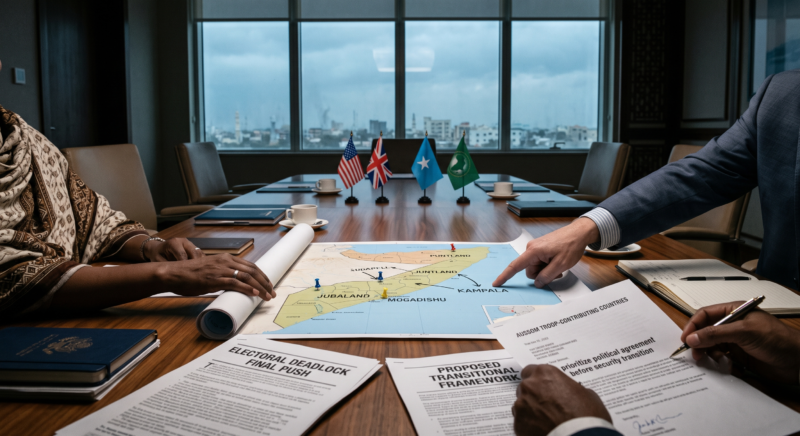
The comments were a direct response to an open letter issued by the Somali Future Council (Golaha Mustaqbalka Soomaaliyeed) on July 27, which called for the establishment of an inclusive Transitional Council to oversee Somalia’s constitutional and electoral process until new national institutions could be peacefully renewed. The letter was addressed to the heads of state, defence ministers and chiefs of defence forces of countries contributing troops to the African Union Support and Stabilization Mission in Somalia (AUSSOM), including Uganda, Kenya, Ethiopia, Djibouti, Burundi and Egypt.
The Somali Future Council argues that Somalia has entered a dangerous constitutional phase, maintaining that President Hassan Sheikh Mohamud’s constitutional mandate expired on May 15, 2026, and Parliament’s term ended on April 14, 2026. The council has proposed a Transitional Direct Elections Model (TDEM) that would maintain the 4.5 clan power-sharing system while introducing direct voting for parliamentary representatives.
‘Dialogue, Not Transitional Rule’
Abdirisaq insisted that Nabad iyo Nolol has never supported returning Somalia to a transitional arrangement, arguing that political disagreements should instead be resolved through dialogue and consensus. “The appropriate solution is to continue the ongoing dialogue between Somali political stakeholders and reach an agreement based on compromise and consultation rather than creating a new transitional process,” he said.
He also criticised President Hassan Sheikh Mohamud, saying it was unfortunate that Somalia, which formally emerged from the transitional era during Hassan Sheikh’s first presidency, is once again debating a return to that system under his current administration.
A Growing Rift Within the Opposition
The exchange reflects deepening divisions within Somalia’s political opposition over how to resolve the country’s political impasse. While the Somali Future Council argues that a transitional arrangement is necessary to restore legitimacy and national consensus, Nabad iyo Nolol maintains that the country’s leaders should work within the existing political framework to reach an inclusive agreement through dialogue.
The proposal has already drawn criticism from other opposition figures, including former Minister Mohamed Abukar Islow and former Mogadishu Mayor Thabit Mohamed, who argued that replacing existing institutions with an unelected transitional body could weaken Somalia’s fragile statehood and reverse years of institutional progress. The strongest government reaction came from Defence Minister Ahmed Moallim Fiqi, who forcefully rejected the proposal and accused the Future Forum of seeking to dismantle Somalia’s constitutional order.
Way Forward
Nabad iyo Nolol’s rejection of the transitional government proposal underscores the growing fragmentation within Somalia’s opposition as the country navigates a deepening political crisis. With internationally mediated talks at an impasse and no agreed framework for elections or political transition, the gap between the federal government and its critics continues to widen.
For the Somali people, the debate over transitional governance is not merely an academic exercise. It is a question of whether the country’s hard-won gains in state-building will be preserved or undone by a political class that has yet to demonstrate the capacity to resolve its differences through dialogue. The rejection of the proposal by Nabad iyo Nolol, while politically significant, does not offer a clear path forward. Without a credible alternative, the country risks remaining trapped in a cycle of political paralysis that benefits no one except those who profit from instability.
Recommended Reading On ftlsomalia.com
- Somali Future Council Unveils Transitional Direct Elections Model for 2026
- Opposition Seeks Wider Role in Election Talks
- Puntland Leader Slams Federal Government’s Election Plans as Predetermined and Undemocratic
- EU and Somalia Advance Constitutional Reforms and Direct Elections
- Venue Dispute Stalls Electoral Talks as Parliament Pushes Ahead with Constitutional Debate
- Cabinet Invites Somali Future Council to Consultative Forum in Mogadishu