RIYADH – Saudi Arabia, Somalia and 11 other nations have announced the formation of a new maritime security coalition aimed at protecting freedom of navigation in the Bab al-Mandab Strait, the Red Sea and the Gulf of Aden, in a move that signals a significant realignment of regional security architecture as the Iran-U.S. conflict continues to disrupt global energy shipments through the Strait of Hormuz.
The coalition, announced by the Saudi Ministry of Defence, brings together Saudi Arabia, Somalia, Turkey, Kuwait, Bahrain, Qatar, Jordan, Egypt, Pakistan, Djibouti, Bangladesh, Yemen, Sudan and the Comoros. The United Arab Emirates and Oman did not join the alliance despite their strategic interests in the region. The coalition is described as defensive in nature and open to additional members, with the door remaining open for other nations that complete their internal procedures to join.
A Strategic Shift in Regional Dynamics
The announcement comes at a time of heightened regional tensions following the near-complete closure of the Strait of Hormuz, through which approximately 20 percent of global oil and gas exports previously passed. The Bab al-Mandab Strait, a 29-kilometre-wide chokepoint separating the Horn of Africa from the Arabian Peninsula, is a critical artery for global maritime trade, with an estimated 10 to 12 percent of global trade passing through its waters daily. The strait is currently under threat from Houthi attacks on shipping, with the Iran-backed group having imposed a maritime blockade on Saudi Arabia in recent weeks.
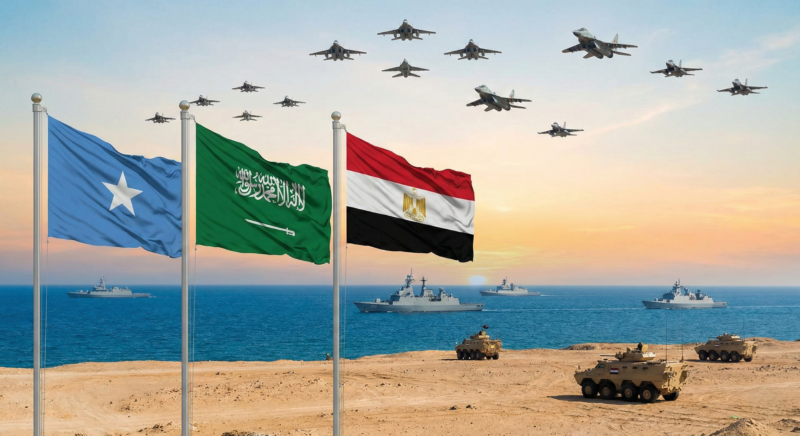
Saudi Arabia has been reportedly concluding negotiations for a new military coalition with Somalia and Egypt, a move that signals a potential shift in regional dynamics relative to the United Arab Emirates’ influence. The new maritime coalition appears to be the culmination of those efforts, expanding beyond the tripartite framework to include a wider array of regional and extra-regional powers.
Somalia’s Strategic Positioning
Somalia’s inclusion in the coalition reflects its growing strategic importance in the Red Sea security architecture. The Federal Government has acknowledged ongoing discussions regarding a proposed tripartite security arrangement with Saudi Arabia and Egypt, focusing on enhancing collaboration on Red Sea security and broadening military partnerships. Somalia and Saudi Arabia have previously established a landmark cooperation agreement focused on port development and maritime transport, aiming to enhance economic relations and reinforce collaborative security along critical Red Sea trade routes.
Saudi Arabia has consistently voiced political backing for Somalia’s territorial integrity and its efforts against Al-Shabaab, although its material assistance has historically been limited. The new coalition could represent the Kingdom’s most significant direct effort to strengthen the East African nation’s security architecture.
The UAE’s Absence and Regional Tensions
The absence of the UAE from the coalition is notable, given Abu Dhabi’s substantial investments in the region, including the ports of Berbera in Somaliland and Bosaso in Puntland. Somalia terminated all security and port agreements with the UAE, accusing Abu Dhabi of violating Somali sovereignty and territorial integrity. The diplomatic rupture occurred in the wake of Israel’s recognition of Somaliland, a move that was promptly condemned by major regional powers, including Saudi Arabia, Egypt and Turkey.
Saudi Arabia has consistently supported Somalia’s territorial integrity, and the new coalition appears to be part of a broader effort to counter UAE influence in the Horn of Africa. The OIC issued a statement describing Israel’s recognition of Somaliland as a direct threat to the peace and security of the Horn of Africa and the Red Sea region.
A Defensive Alliance with Uncertain Impact
The coalition’s members have stated that they share a “belief that maritime security is a shared responsibility” and that “cooperation and coordination among countries are the most important pillars for addressing common and cross-border maritime threats.” The planned operations include intelligence and information sharing, operational planning, joint patrols and the execution of maritime operations.
However, the announcement raises questions about the coalition’s operational effectiveness. The Saudi Ministry of Defence did not specify which vessels or aircraft each country would contribute to the mission, and the location of the coalition’s headquarters has not been disclosed. The European Union has previously conducted Operation Aspides in the Red Sea to protect shipping, but it remains unclear how the new Saudi-led coalition will differ from or coordinate with existing efforts.
Way Forward
The formation of the new maritime coalition marks a significant development in the evolving security architecture of the Red Sea and the Horn of Africa. For Somalia, membership in the coalition represents an opportunity to strengthen its maritime security capabilities and deepen its strategic partnership with Saudi Arabia and other regional powers. However, the coalition’s effectiveness will depend on the willingness of its members to commit resources and coordinate operations, and on whether it can address the underlying drivers of maritime insecurity in the region. The absence of the UAE and Oman raises questions about the coalition’s ability to achieve comprehensive maritime security, and the ongoing conflict between the US and Iran continues to cast a long shadow over the region’s stability.
Recommended Reading On ftlsomalia.com
- Saudi Arabia, Egypt, Somalia Form New Military Coalition
- Somalia Confirms Red Sea Security Pact Discussions with Saudi Arabia, Egypt
- Somalia, Saudi Arabia Sign Maritime Cooperation Agreement
- Somali Foreign Minister and Saudi Counterpart Discuss Bilateral Cooperation and Maritime Security
- Somalia Terminates All UAE Agreements
- Saudi Arabia Reaffirms Backing for Somalia’s Sovereignty and Stability