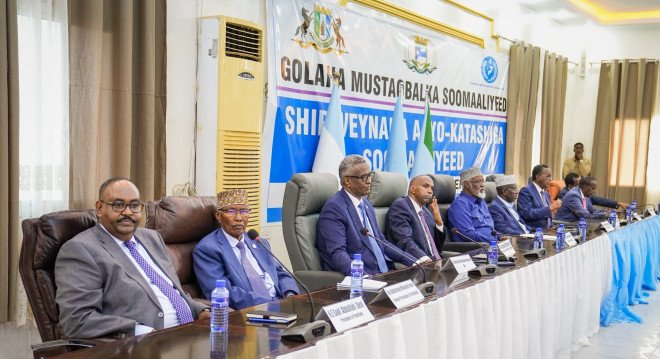
MOGADISHU – The second phase of political negotiations between Somalia’s Federal Government and opposition groups commenced on Thursday, with both sides seeking to bridge deep disagreements over the country’s electoral framework and contested constitutional amendments. The talks, which began on July 7, are viewed as a critical opportunity to break the political deadlock that has gripped the country since the collapse of previous negotiations at Mogadishu’s Halane compound in May.
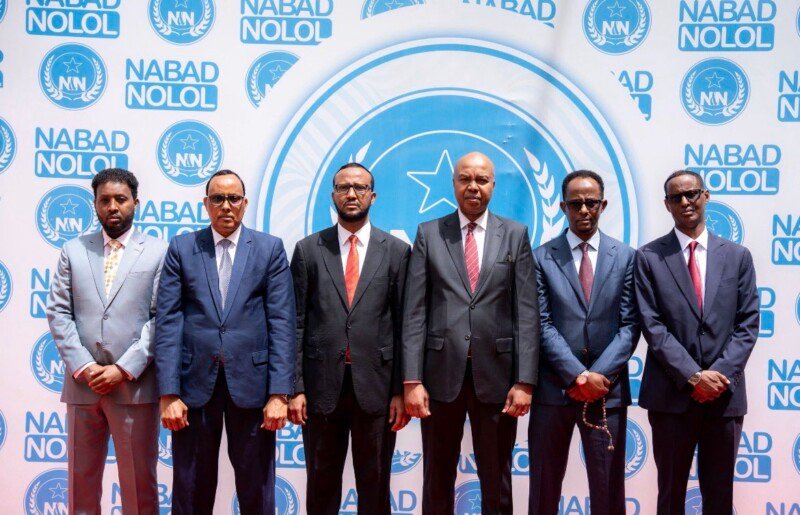
The talks opened with a meeting between representatives from Villa Somalia and a technical committee representing former President Mohamed Abdullahi Farmaajo. Turkish mediators and international partners were present as observers. The opposition’s technical committee, operating under the “Nabad iyo Nolol” umbrella, stated that its approach is guided by Farmaajo’s vision of achieving national unity and consensus to navigate the country’s current political crisis.
Farmaajo has previously called on President Hassan Sheikh Mohamud to establish an inclusive electoral framework before his term concluded, warning that a lack of consensus could trigger further instability.
Opposition to Present Electoral Proposals
A statement from the “Nabad iyo Nolol” technical committee confirmed that the second phase had begun, with the opposition intending to present a detailed electoral model that it believes can be implemented in the current political climate. The committee stated that it would outline the type of election that can be held and the conditions necessary for its implementation.
“The technical committee representing the ‘Nabad iyo Nolol’ opposition in the talks has now entered the second phase of discussions on the country’s electoral affairs, guided by the vision of the 9th President of the Republic, Mohamed Abdullahi Farmaajo, which is based on unity and consensus to overcome the country’s difficult situation,” the statement read.
Previous negotiations between the government and the opposition concluded without a resolution, revealing deep, ongoing disagreements regarding the nation’s electoral trajectory.
Two Possible Outcomes: Breakthrough or Breakdown
Political observers tracking the negotiations have identified two possible scenarios. The first is a breakthrough agreement that would break the political deadlock and pave the way for a consensus-based electoral framework. The second is a collapse of the talks, potentially leading to the international community withdrawing its mediation efforts and leaving Somali stakeholders to resolve their differences independently.
Analysts have emphasised that both sides face significant pressure to compromise, given the sensitive transition period the country is undergoing. The failure of the previous round of talks highlighted the deep divisions between the government and the opposition, particularly on the electoral model and the constitutional amendments.
International partners have repeatedly urged renewed dialogue, warning that broad political consensus is essential for the legitimacy and stability of any future election process.
Core Disputes and Competing Electoral Models
The core of the deadlock remains the electoral model. The federal government, led by President Hassan Sheikh Mohamud, has advocated for a one-person, one-vote system, while the opposition Future Council has proposed an alternative “Expanded Indirect Election” model that blends direct voting with the 4.5 clan power-sharing formula.
The opposition has previously unveiled a detailed electoral roadmap that it says could break the political stalemate, featuring a constituency-based system in which citizens directly elect parliamentary representatives while retaining the clan allocation formula.
Opposition leaders have drawn sharp battle lines against what they describe as “illegitimate term extensions” and “disputed elections”, warning the government not to push the country into another cycle of political turmoil. President Hassan Sheikh Mohamud’s official term expired on May 15 under the 2012 Provisional Constitution, though he maintains that constitutional amendments passed in March have extended his mandate by one year.
Escalating Political and Security Crisis
The talks come against the backdrop of escalating political tensions and security incidents in Mogadishu. Days of heavy fighting between government forces and opposition-aligned militias in the Abdiaziz and Howlwadaag districts preceded the talks, with the federal government declaring that order has been restored.
Turkey has joined mediation efforts, with former Presidents Sharif Sheikh Ahmed and Mohamed Abdullahi Farmaajo moving away from the Marinayo area, signaling potential de-escalation.
Constitutional Disputes and Way Forward
The talks also address the constitutional amendments that have deepened the rift between Mogadishu and regional administrations. Puntland has formally rejected the constitutional amendments, while Jubaland has also expressed strong opposition to the changes.
The federal government recently abolished the use of the title “president” for regional state leaders, renaming them “leaders” (hoggaamiye) in line with constitutional amendments that have been rejected by Puntland and Jubaland.
The outcome of the talks remains uncertain. The United Nations has urged leaders to continue political dialogue and establish consensus on an inclusive electoral model, warning that failure to do so could undermine recent security gains and distract from the fight against Al-Shabaab.
The coming days will determine whether the parties can reach a compromise or whether the country will face further instability. As one observer noted, the Somali people are watching closely, hoping that the talks will yield a sustainable solution that ends the cycle of political crises and allows the country to focus on its broader challenges.
Recommended Reading On ftlsomalia.com:
- New Round of Talks Opens Between Somali Government and Opposition as International Mediators Step In
- Farmaajo Urges President to Establish Inclusive Election Framework Before Term Ends
- Somalia Election Talks Collapse Amid Dispute
- International Community Calls for Somalia to Resume Dialogue
- Turkey Joins Mediation Efforts as Former Presidents Move Away from Marinayo