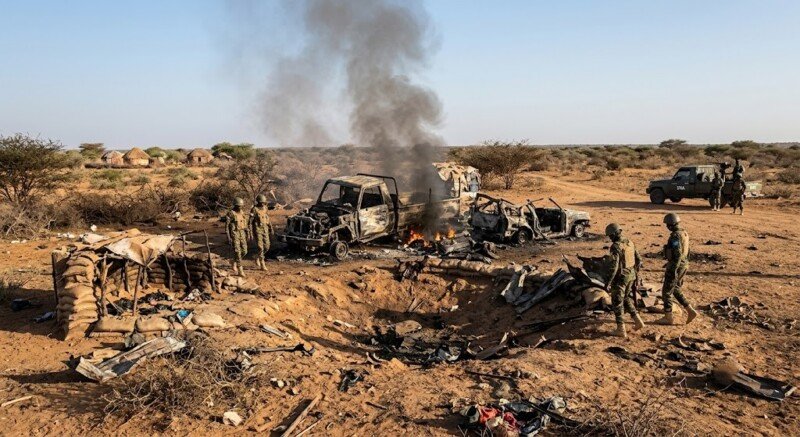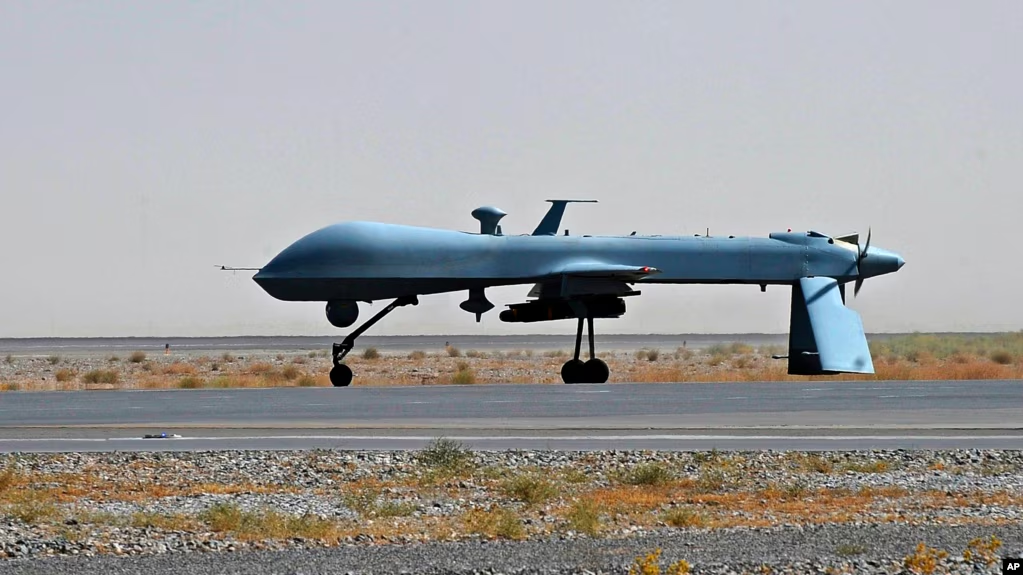
MOGADISHU — The National Armed Forces, working alongside international allies, have conducted six airstrikes targeting Al-Shabaab positions across four regions, the Somali Defense Ministry announced Wednesday .
The operations took place in Tardho (Hiiraan), Ugunji (Lower Shabelle), Daynuunaay (Bay), and Qumbi (Lower Jubba), where recent surveillance had detected militant activity . The strikes destroyed key enemy strongholds and supply stockpiles, severely limiting the group’s logistics, movement, and capacity to plan attacks against Somali civilians .
The attacks resulted in 54 Al-Shabaab militants killed and several others wounded, according to the Defense Ministry .
Separate Ground Operation in Juba Regions
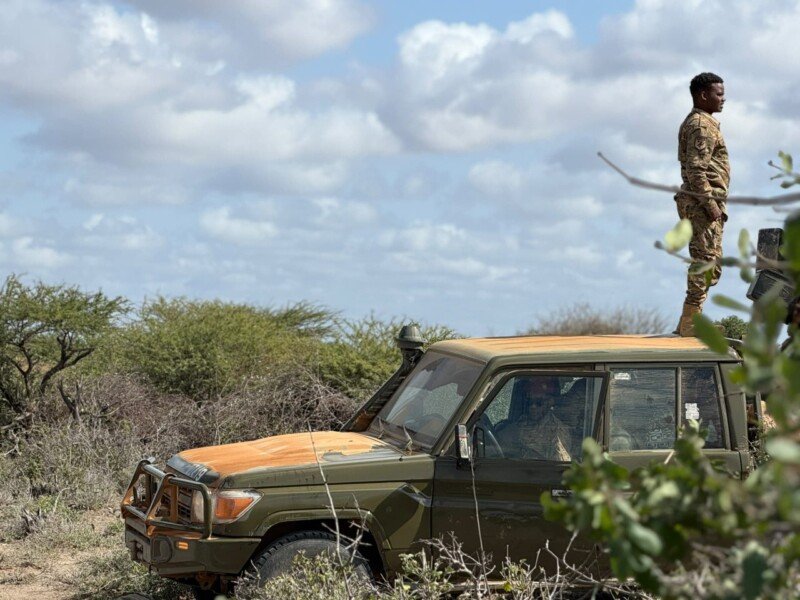
The airstrikes come one day after the Somali National Army (SNA), in coordination with Jubbaland Security Forces, launched a major ground operation across parts of the Lower and Middle Juba regions . That operation, which also received air support from international partners, resulted in the deaths of 27 Al-Shabaab militants, including senior commanders within the organization .
Military activities in the ground operation were focused in districts including Jilib, Xagar, and Afmadow, specifically in locations such as Waraha Qalley, Farshabeel, Jigees, Qawiley, and Weelmaarow, where ground troops advanced to dismantle militant strongholds .
The Somali National Army, in coordination with Jubbaland Security Forces, conducted a large-scale military operation across parts of the Lower and Middle Juba regions, targeting Al-Shabaab militants in key strongholds . Authorities also confiscated substantial quantities of weaponry and military supplies, including BKM machine guns, RPG launchers, AK-47 rifles, and explosive materials planned for use against civilian and security targets .
Combined Toll and Ongoing Operations
In total, Somali forces have killed 81 Al-Shabaab militants over the past two days across the coordinated ground and air operations . Military leadership has confirmed that operations continue, with current efforts concentrated on eliminating remaining militant presence and reinforcing security advances across the affected regions .
“The Somali National Armed Forces continues operations to pursue the remaining Al-Shabaab elements, in order to ensure security, stability and the safety of civilians living in Somalia,” the Defense Ministry stated .
Intensified Campaign Against Al-Shabaab
The latest operations are part of intensified efforts by allied forces against Al-Shabaab insurgents in south-central Somalia in recent months . Al-Shabaab, which is linked to al-Qaeda, continues to pose a significant threat to peace and stability in Somalia and the region, controlling large swaths of southern and central Somalia despite ongoing military offensives by government forces and their allies .
In January 2026, coordinated strikes in the Saakow District of Middle Juba Region targeted and fully demolished Al-Shabaab’s largest explosives manufacturing plant, resulting in the deaths of 18 militants, including specialized bomb-makers actively preparing devices to target Somali civilians. Simultaneously, Danab Special Forces executed a targeted overnight operation in the Buur Eyle area, killing 22 terrorists and eliminating all explosive materials intended for assault .
Defense Minister Ahmed Moallim Fiqi has detailed ambitious operational plans to advance ground forces from Barawe in the Lower Shabelle region directly toward Jilib. This planned offensive is part of a much wider, coordinated initiative to systematically extend federal government authority and security architecture throughout the entire nation .
“The Somali National Army has regained strong, independent operational capabilities and is now fully capable of conducting targeted, high-intensity offensives in remaining militant-controlled areas,” Minister Fiqi has stated .
The Somali National Army has reaffirmed its commitment to continuing operations aimed at ensuring long-term stability, security, and the protection of civilians .