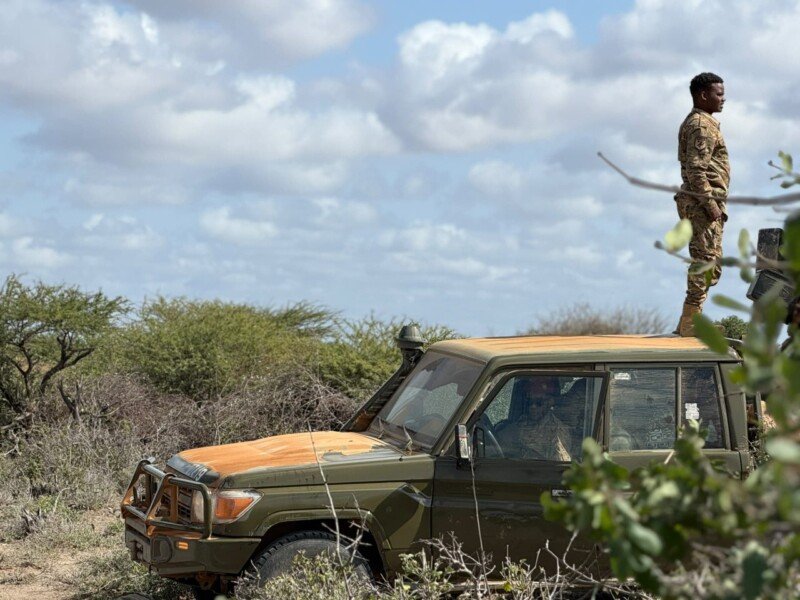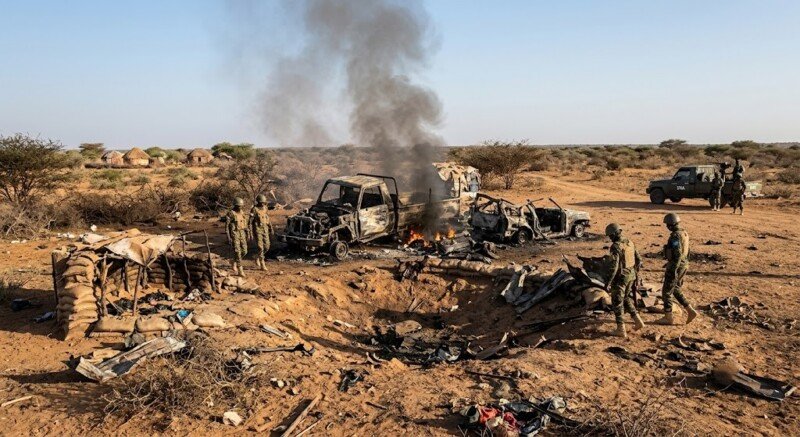
MOGADISHU – The Somali National Army, in coordination with international partners, carried out a precision airstrike on July 21 targeting Al-Shabaab positions in the Suullaay area, approximately 17 kilometres south of Teedaan in the Hiiraan region, killing 18 militants and wounding 21 others, the Ministry of Defence has confirmed.
The operation also destroyed a military vehicle and defensive fortifications used by the group. The Ministry of Defence commended the professionalism of the Somali National Army and expressed gratitude to international partners for their support.
Teedaan: A Longstanding Flashpoint
The Suullaay area, where Tuesday’s strike took place, has been a recurring target in the campaign against Al-Shabaab. In August 2022, Somali National Army forces carried out a military operation in Hiiraan, successfully liberating Teedaan village from the control of the militant group. The operation at the time sought to free the village from Al-Shabaab’s grip, which had lasted for years. Shortly after that liberation, the SNA distributed relief food to residents of Teedaan who had been affected by the ongoing drought.
The fact that Al-Shabaab has been able to re-establish a presence in the area, despite previous military operations, underscores the group’s resilience and the challenges of securing liberated territories.
A Pattern of Precision Strikes
Tuesday’s airstrike is part of a broader pattern of intensified military operations across south-central Somalia. In April 2026, the National Armed Forces, working alongside international allies, conducted six airstrikes across four regions, including Tardho in Hiiraan, resulting in the deaths of 54 Al-Shabaab militants. In July 2026, airstrikes in Middle Shabelle killed 26 militants and destroyed vehicles and fuel depots, while separate strikes in Lower Shabelle killed 27 fighters.
The Suullaay operation, like others before it, reflects the military’s growing capacity to conduct precision strikes with international support. The United States has significantly ramped up its aerial campaign in Somalia, with nearly 50 airstrikes conducted in the first quarter of 2026 alone.
The Limits of Air Power
The government has framed the airstrikes as a major success, highlighting the professionalism of the armed forces and the support of international partners. However, the reliance on air power to degrade Al-Shabaab raises questions about the sustainability of the campaign. Airstrikes can kill militants and destroy infrastructure, but they cannot address the underlying conditions—corruption, clan grievances, and economic marginalisation—that allow the insurgency to endure.
The ability of Al-Shabaab to regroup in areas like Suullaay, despite previous operations, suggests that military pressure alone is insufficient. President Hassan Sheikh Mohamud’s declaration of a “final offensive” has triggered a wave of defections, with several senior Al-Shabaab commanders surrendering to Somali forces in recent days. But the group’s structural weaknesses remain entrenched.
A Campaign of Attrition, Not Elimination
The Ministry of Defence and the Somali National Army High Command have stated that operations will continue until the terrorist threat is eliminated. Yet the group’s repeated ability to regroup after strikes suggests that while tactical gains are being made, strategic defeat remains elusive. The government’s emphasis on military solutions, while neglecting governance and service delivery, risks perpetuating a cycle of violence rather than breaking it.
As the Somali National Army continues its operations, the challenge remains: whether military pressure alone can break the insurgency, or whether it must be paired with a credible effort to build state institutions, deliver services, and address the grievances that fuel the conflict.
Way Forward
Tuesday’s airstrike near Teedaan is a tactical victory for the Somali National Army and its international partners. It demonstrates the growing capability of Somali forces to conduct precision operations against a resilient and adaptive enemy. However, the broader challenge remains: whether military pressure alone can break the insurgency, or whether it must be paired with a credible effort to build state institutions, deliver services, and address the grievances that fuel the conflict.
Without a comprehensive strategy that includes governance, reconciliation, and economic development, the airstrikes may succeed in killing militants but will fail to bring lasting peace.
Recommended Reading On ftlsomalia.com
- SNA Captures Al-Shabaab Stronghold
- SNA Distribute Relief Food to Residents of Hiiraan Region
- Airstrikes Eliminate 54 Al-Shabaab Fighters in Four Regions
- Military Operations Target Al-Shabaab Strongholds in Gayfo, Ruun Idiris and Qordheere
- U.S. Escalates Airstrikes Against Militant Groups in Somalia
- ‘Final Offensive’ Triggers Wave of Defections as Al-Shabaab Leaders Surrender in Lower Shabelle