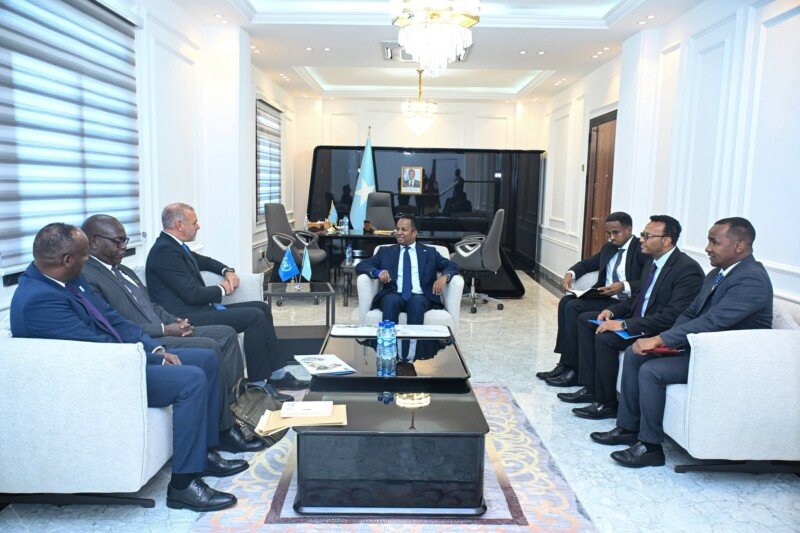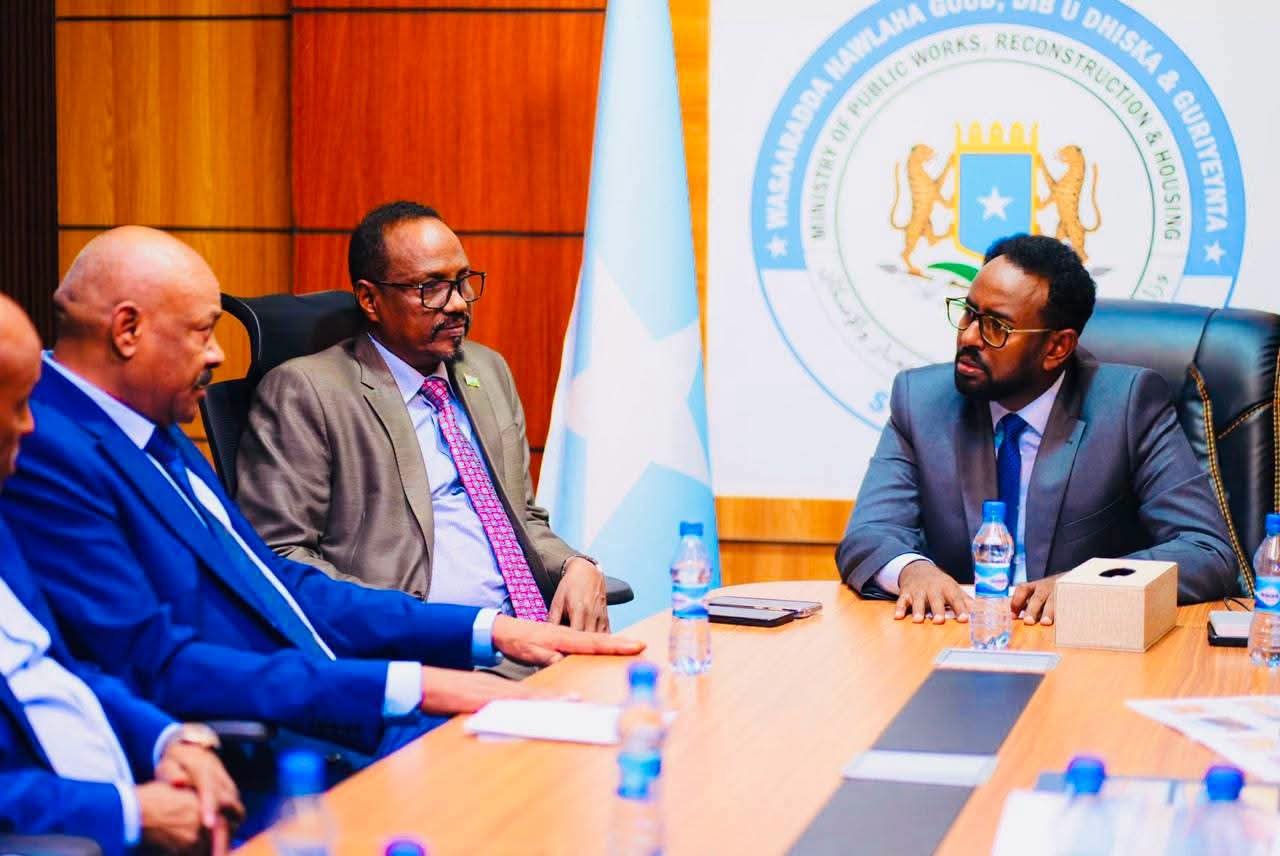
MOGADISHU — The Minister of Public Works, Reconstruction and Housing, MP Ayub Yusuf, has received a delegation of investors and business representatives from Turkey, Djibouti and Sudan at his office in Mogadishu to discuss investment opportunities in Somalia’s housing and construction sector.
The delegation, which is assessing investment opportunities in Somalia, expressed particular interest in affordable housing projects, including the construction of hospitals, schools, and residential units for Somali families.
Minister Ayub briefed the investors on the available opportunities in the country, emphasising that the Ministry is committed to facilitating investment in affordable housing that low-income families can afford. He stated that the Ministry is prepared to streamline regulations, procedures, and essential services to enable investors to operate efficiently in Somalia and invest in construction and housing projects.
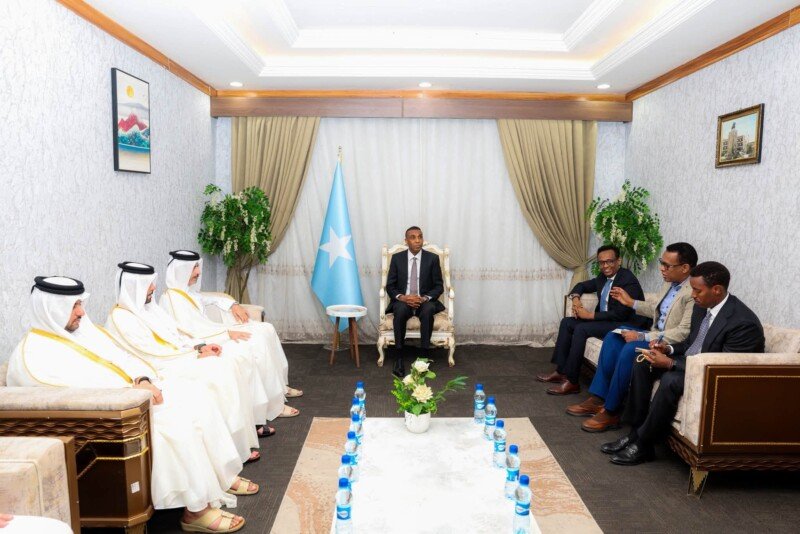
Somalia and Djibouti have reaffirmed their strategic partnership in recent high-level talks, with discussions focusing on cooperation in security, trade, and economic development. Djibouti has been a consistent partner in Somalia’s stabilisation and state-building efforts, with its forces playing a key role in securing the Hiiraan region.
Mogadishu and Djibouti ports have strengthened their partnership to boost regional connectivity and trade, with both sides committing to improving cargo management systems and streamlining customs processes to reduce trade bottlenecks.
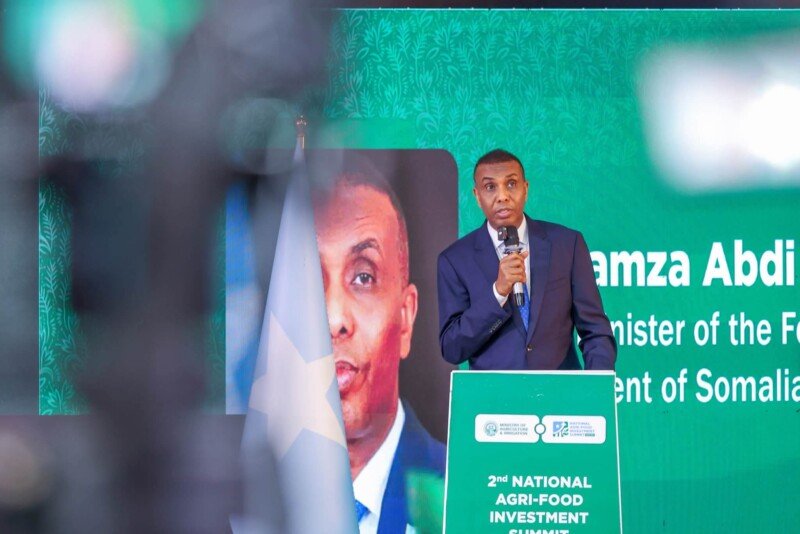
Prime Minister Hamza Abdi Barre has held talks with Djibouti’s Ambassador and Police Commander, reaffirming the longstanding fraternal ties and strategic partnership between the two Horn of Africa nations. Djibouti has remained one of Somalia’s closest allies, playing a significant role in peacekeeping, mediation and security sector development.
Somalia and Djibouti have bolstered defense ties through ministerial meetings, focusing on deepening bilateral defence cooperation, enhancing regional security, and coordinating efforts to combat terrorist groups.
Attracting Foreign Investment in Housing
The meeting reflects growing international interest in Somalia’s reconstruction and housing sector, as the country continues to rebuild after decades of conflict. The government has identified affordable housing as a priority area, with a significant portion of the population lacking adequate shelter.
Turkey, Djibouti and Sudan have emerged as key partners in Somalia’s reconstruction, with Turkish companies already involved in infrastructure projects and Sudanese investors expressing interest in affordable housing and urban development.
Somalia and Djibouti have held key bilateral talks focused on strengthening cooperation in security, trade, and infrastructure, with both countries committed to enhancing regional diplomacy and advancing peace and development in the Horn of Africa.
The Djiboutian delegation’s presence at the meeting underscores the growing economic ties between the two neighbours. President Hassan Sheikh Mohamud visited Djibouti in March 2026 for a strategic working visit focused on enhancing bilateral ties and deepening cooperation between the two nations.
Djibouti has also participated in Somalia’s education sector, with a delegation led by the Minister of Higher Education attending the 3rd National Education Conference, highlighting the fraternal bonds and collaborative efforts between the two nations.
Sudan and Somalia have also maintained strong bilateral ties. The two countries have signed agreements on visa-free diplomatic travel and defence cooperation, reflecting growing cooperation across multiple sectors.
Critical Note
While the interest from foreign investors in Somalia’s housing sector is encouraging, the government must ensure that investment agreements are structured in a way that benefits Somali citizens. Affordable housing projects should prioritise local communities and create job opportunities for Somali workers, rather than simply serving as profit-making ventures for foreign investors.
Furthermore, the government must address the regulatory and institutional challenges that have historically hindered investment in Somalia, including land tenure issues, unclear property rights, and weak legal frameworks. Without such reforms, the potential for foreign investment to address the housing deficit will remain limited.
Recommended Reading On ftlsomalia.com
- Somalia and Djibouti Reaffirm Partnership in Mogadishu Talks
- Mogadishu and Djibouti Ports Strengthen Partnership
- Prime Minister Hamza Meets Djibouti Ambassador and Police Commander
- Hassan Sheikh Mohamud Travels to Djibouti
- Prime Minister Hamza Opens 3rd National Education Conference
- Visa-Free Diplomatic Travel and Defence Cooperation with Sudan