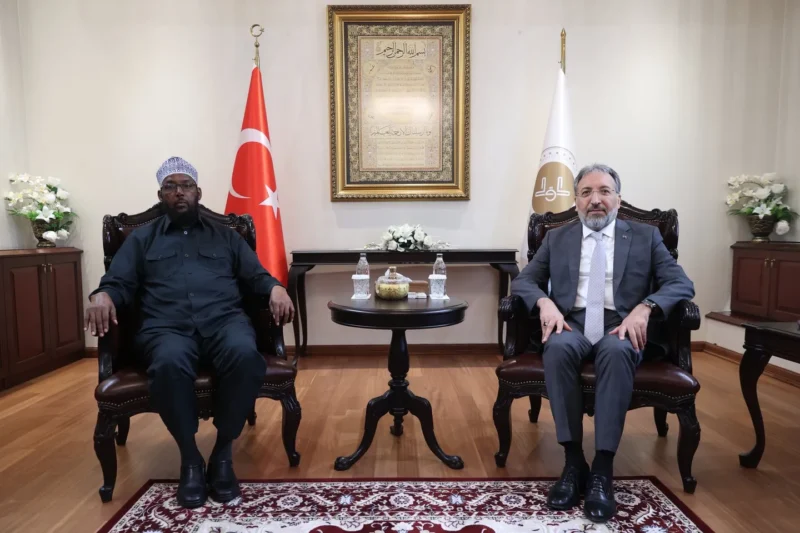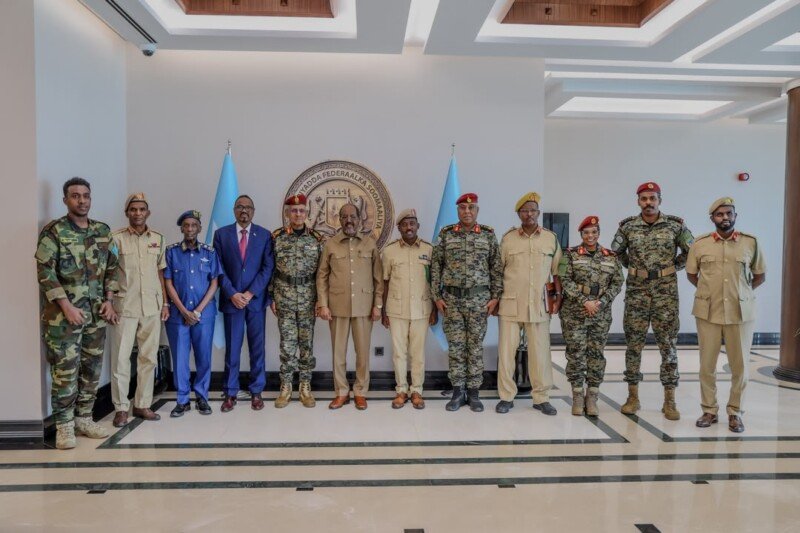
ISLAMABAD — Somalia’s Minister of Defence, Ahmed Moallim Fiqi, has concluded a series of high-level engagements in Pakistan, including visits to the air and naval headquarters, the state-owned defence manufacturer Global Industrial & Defence Solutions (GIDS), and the National Defence University, as part of efforts to deepen bilateral military cooperation and modernise Somalia’s armed forces.
The visit, which follows the signing of a Memorandum of Understanding (MoU) on defence cooperation between the two countries earlier this week, focused on strengthening military ties, enhancing air and naval capabilities, expanding training opportunities, and promoting the exchange of expertise in defence manufacturing and military technology.
Minister Fiqi was accompanied by Somalia’s Ambassador to Pakistan, Sheikh Noor Mohamed Hassan, the Commander of the Somali Air Force, Brigadier General Abdirizak Mahmoud Haji, and the Commander of the Somali Navy and Coast Guard, Rear Admiral Abdiwahab Abdullahi Omar, along with other senior officials.
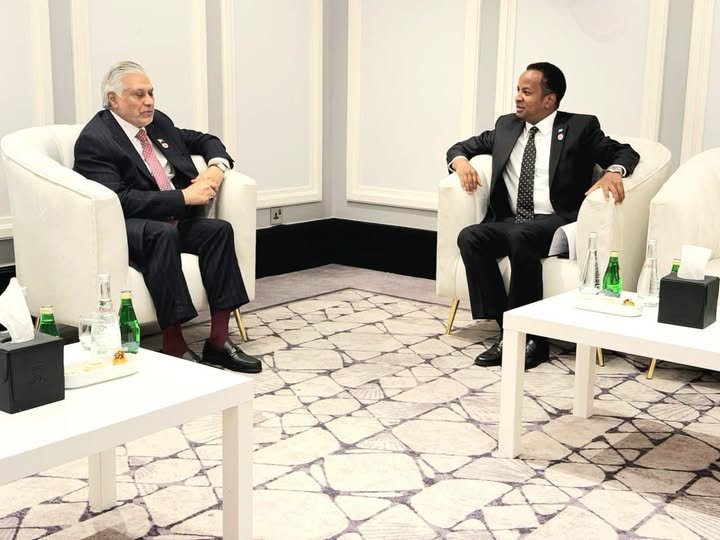
The visit builds on a series of recent high-level engagements between Mogadishu and Islamabad. Foreign Ministers Abdisalam Ali and Ishaq Dar met in Brussels in November 2025 to discuss expanding partnership in diplomacy, security, trade, and institutional capacity-building. Somalia has also partnered with Pakistan on internal security, border management, and digital identity infrastructure, with Interior Minister Ali Yusuf Ali visiting Islamabad for official talks.
Defence Cooperation MoU Signed
The foundation for the latest engagements was laid on Tuesday, when Minister Fiqi and Pakistan’s Defence Minister Khawaja Muhammad Asif signed a defence cooperation MoU in Islamabad. Under the agreement, the two countries will enhance cooperation in counterterrorism, military training, the exchange of expertise and professional knowledge, defence capacity building, and broader security collaboration to support efforts aimed at promoting peace and stability. The agreement reflects the shared commitment of Somalia and Pakistan to deepening their strategic partnership and expanding defence and security cooperation.
The defence MoU was signed in Islamabad at the start of Minister Fiqi’s visit, laying the groundwork for the subsequent high-level military engagements.
Visits to Air and Naval Headquarters
During the visit to Air Headquarters in Islamabad, Minister Fiqi was received by Air Chief Marshal Zaheer Ahmed Baber Sidhu, the Chief of the Air Staff. The meeting focused on strengthening bilateral military cooperation, enhancing air force capabilities, expanding training opportunities, promoting the exchange of expertise, and further strengthening defence and security cooperation between the two countries. Air Chief Marshal Sidhu highlighted the Pakistan Air Force’s indigenous capability development, advanced training infrastructure and professional exchange programmes, reaffirming the PAF’s commitment to strengthening institutional cooperation with the Somali Air Force.
At Naval Headquarters, Minister Fiqi met with Chief of the Naval Staff Admiral Naveed Ashraf. The two sides discussed matters of mutual professional interest, regional maritime security and avenues for expanding bilateral defence collaboration. Admiral Ashraf reaffirmed Pakistan’s commitment to further strengthening defence ties with Somalia and promoting closer naval cooperation. The Somali defence minister appreciated the Pakistan Navy’s contributions to regional maritime security and praised the Pakistan Air Force’s professionalism and operational capabilities.
Focus on Defence Technology and Military Education
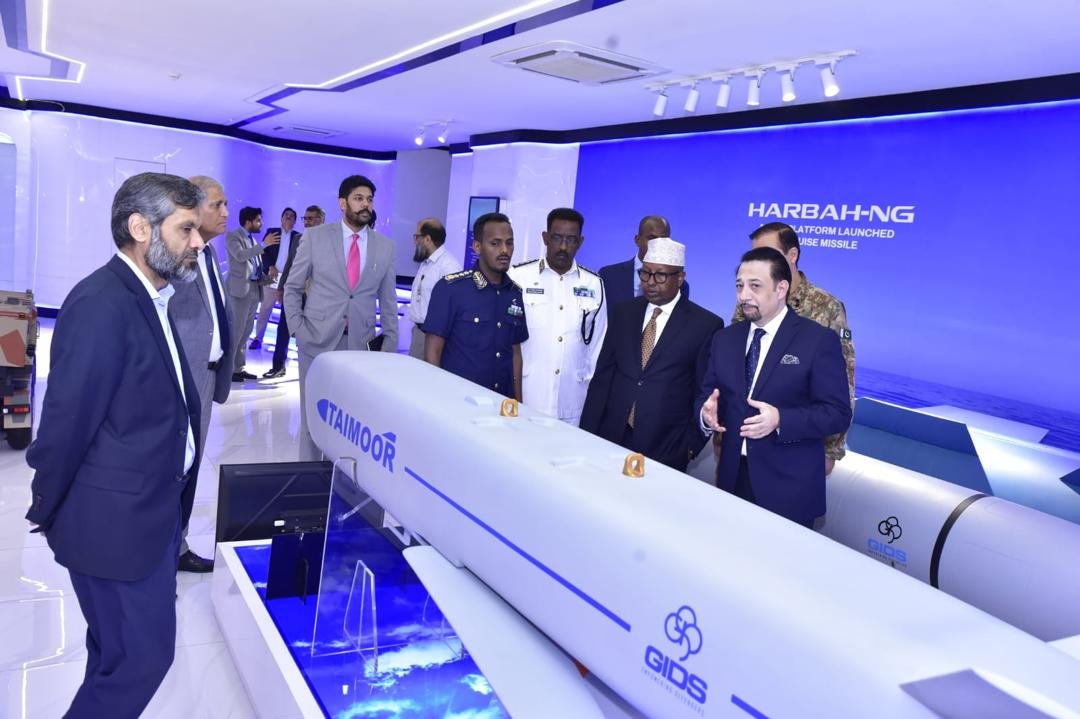
Minister Fiqi also visited the headquarters of Global Industrial & Defence Solutions (GIDS), a state-owned defence manufacturer, where he was received by Chief Executive Officer Asad Kamal, who briefed him on the company’s capabilities in defence manufacturing, military technology, and advanced defence solutions. The two sides discussed opportunities to strengthen cooperation in the defence industry, military capability development, and how Somalia could benefit from GIDS’ expertise and advanced defence technologies.
Talks at GIDS centred on expanding cooperation in defence production, military technology and capacity building, with both sides exploring how Somalia could benefit from Pakistan’s expertise in advanced defence systems and defence industry development. The visit builds on a defence cooperation memorandum signed earlier this week, which provides a framework for collaboration on counterterrorism, military training, defence capacity building and the exchange of military expertise.
At the National Defence University, Minister Fiqi was received by the President of the University, Lieutenant General Babar Iftikhar, and received a briefing on the University’s role in higher defence education, strategic studies, security research, and the development of senior military leadership. Discussions focused on strengthening cooperation in higher military education, strategic studies and leadership training for senior officers, areas seen as critical to Somalia’s ongoing security sector reforms.
Somalia is currently in advanced negotiations with Pakistan to purchase up to 24 JF-17 Thunder fighter jets in a potential $900 million agreement that would mark the nation’s most ambitious attempt since 1991 to reestablish a sovereign air combat capability. Pakistani Defence Production Minister Raza Hayat Harraj has highlighted the financial logic behind the deal, noting that the JF-17 offers a cost-effective alternative to Western options that cost more than three times as much.
Wider Strategic Context
Somalia has in recent years stepped up efforts to diversify its defence partnerships as it rebuilds national security institutions after decades of conflict. The government has expanded military cooperation with countries including Türkiye, Qatar, Jordan and Pakistan, complementing long-standing support from the African Union, the United States and other international partners. Cabinet approval of defence cooperation agreements with Pakistan, Jordan and Qatar in 2025 underscored Mogadishu’s strategy of broadening military partnerships beyond operational support to include institutional development and training.
Partnerships centred on officer education, technology transfer and institutional capacity are increasingly important as Somalia works to professionalise its armed forces and gradually assume greater responsibility for national security while continuing operations against Al-Shabaab. Defence cooperation with countries such as Pakistan is also expected to support long-term reforms aimed at strengthening command structures, specialised training and military self-reliance.
Critical Note
While Minister Fiqi’s visit to Pakistan and the signing of the defence MoU represent significant steps in Somalia’s efforts to diversify its military partnerships, the effectiveness of these agreements will ultimately depend on implementation and institutional capacity. The potential acquisition of JF-17 fighter jets, while strategically significant, raises questions about Somalia’s ability to sustain and operate such advanced military equipment given the country’s limited defence budget and technical expertise. The reported $900 million price tag for the fighter jets represents a substantial financial commitment for a country still recovering from decades of conflict and facing persistent humanitarian crises. Furthermore, while Pakistan’s offer of a comprehensive defence partnership with fewer political strings than Western alternatives is appealing, it also carries risks, including potential over-reliance on a single supplier for critical military capabilities. The government would be well advised to ensure that defence spending is balanced against pressing social and economic needs, and that any major procurement is accompanied by transparent oversight and accountability mechanisms. The international community, while supportive of Somalia’s security sector reforms, must also press for governance and accountability in the use of military resources to ensure they serve the long-term goal of a stable, professional, and inclusive Somali security sector.
Recommended Reading On ftlsomalia.com
- Somalia Advances $900M Deal for Pakistani JF-17 Fighter Jets
- Somalia and Pakistan Foreign Ministers Convene in Brussels
- Somalia Partners with Pakistan to Enhance National ID System
- Pakistan and Somalia Pledge to Boost Counter-Terrorism Cooperation
- Somali Interior Minister Visits Pakistan for Official Talks