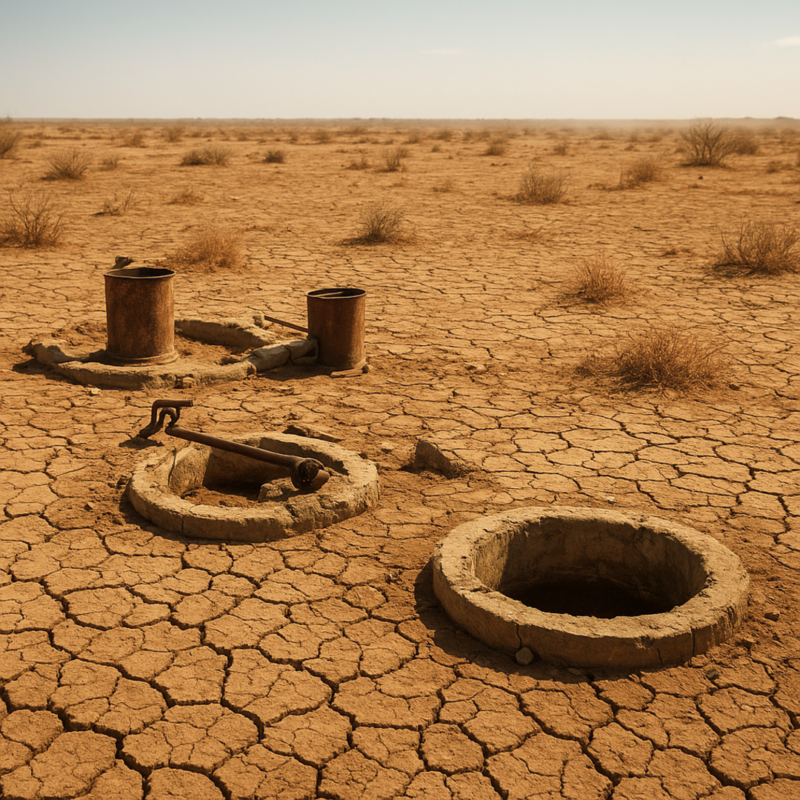
At least 120,000 individuals have been forced to flee their homes across Somalia in recent months as severe drought conditions continue to spread throughout the country, according to the latest assessment from the United Nations Office for the Coordination of Humanitarian Affairs (OCHA). According to OCHA’s 2025 Drought Emergency Situation Report No. 2, published on December 21, prolonged dry weather between September and December has compelled families to leave their residences in pursuit of water resources, grazing land, and essential services, intensifying an already precarious humanitarian environment. The report indicates that 4.61 million citizens, approximately one-quarter of Somalia’s total population, have been impacted by the drought situation nationwide. Regions experiencing the most severe effects include portions of Galgaduud, Mudug, Bari, and Nugaal, where water scarcity, death of livestock, and escalating food costs are undermining local livelihoods. OCHA highlights that a minimum of 170 boreholes and shallow wells have ceased functioning, with 71 located in Galgaduud and Mudug, and 66 in Bari and Nugaal, substantially restricting access to clean water for local inhabitants and pastoral communities. The crisis has been worsened by below-average rainfall during both the April–June (Gu) and October–December (Deyr) rain seasons. The drought situation is also significantly disrupting education. Over 75,000 students have had to discontinue their schooling nationwide as families relocate or find it difficult to satisfy fundamental necessities. Despite the magnitude of this emergency, humanitarian financial support remains critically insufficient. As 2025 concludes, Somalia’s humanitarian appeal required $1.4 billion, yet only approximately $370 million has been secured to date, creating a substantial deficit in urgent life-saving aid. OCHA reports that the UN Emergency Relief Coordinator has designated $10 million from the Central Emergency Response Fund (CERF) to bolster initial drought response efforts, aiming to assist more than 603,000 individuals, but emphasizes that considerably more resources will be necessary to halt further displacement and prevent conditions from deteriorating further. Humanitarian organizations warn that without immediate additional financial contributions and consistent rainfall patterns, displacement figures are expected to rise, intensifying food insecurity and imposing additional pressure on already at risk communities throughout Somalia.