6
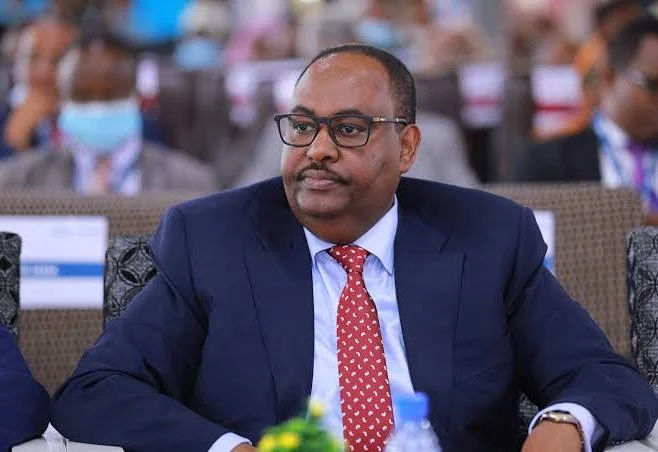
DOHA: Somalia’s State Minister of Foreign Affairs, Ali Mohamed Omar (Ali Bal’ad), has argued that recognizing Somaliland would not deliver stability to the Horn of Africa but would instead entrench permanent division in Somalia and beyond. His comments challenge recent calls for the international recognition of the breakaway region.
The statement, made public on June 2, comes at a critical time for Somalia’s foreign policy. Bal’ad, a senior official in the Federal Government of Somalia, writes that recent arguments advocating for Somaliland’s recognition rest on “a series of assumptions that deserve closer scrutiny.” While proponents portray Somaliland as a unified, stable, and strategically indispensable state, the minister argues that “the realities on the ground tell a far more complicated story.”
State Minister Rejects Somaliland’s Coherence Claims
Bal’ad, who serves as one of President Hassan Sheikh Mohamud’s closest confidants in foreign affairs, argues that the territory which briefly gained independence in June 1960 “ceased to exist when it voluntarily united with the Trust Territory of Somalia to form the Somali Republic.” The minister further contends that the geographic and political boundaries claimed by today’s Somaliland administration “are neither uncontested nor uniformly accepted by the populations living within them.”
The official cites the eastern regions of Sool, Sanaag, and parts of Cayn (SSC), noting that over the past two years local communities “overwhelmingly rejected rule from Hargeisa and established the North Eastern administration, which has since aligned itself with the Federal Government of Somalia.” Bal’ad argues that this development “undermines the central claim that Somaliland represents a unified political community exercising uncontested authority over the territory it claims.”
Additionally, the minister notes that in the west of the Somaliland region, “growing political movements in Awdal have increasingly questioned Hargeisa’s perceived monopoly over political and economic decision-making,” with calls for a distinct regional administration gaining momentum.
Questioning Somaliland’s Stability Claims
The State Minister argues that “stability cannot be measured solely by the existence of institutions or periodic elections,” stating that genuine stability requires “political inclusion, territorial legitimacy, and social consensus.” Bal’ad contends that “none of these conditions currently exists within the Somali territory of Somaliland.”
The article further asserts that the Somaliland secessionist project “faces significant internal opposition,” with political disagreements, clan-based tensions, territorial disputes, and competing visions of governance remaining unresolved. The minister warns that international recognition “risks intensifying these challenges by encouraging zero-sum political calculations among communities that already feel excluded from decision-making processes.”
Critique of Geopolitical Arguments for Recognition
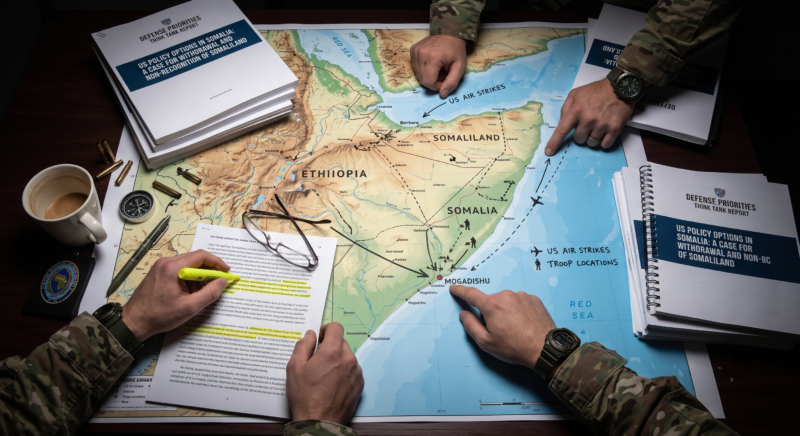
Bal’ad argues that attempts to frame Somaliland as a strategic asset in regional competition “overlook a basic reality: sustainable security arrangements cannot be built on unresolved sovereignty disputes.” Referring to recent developments surrounding foreign engagement with Somaliland, the minister contends that “external involvement has generated new political tensions and heightened anxieties among local communities concerned about militarisation, foreign influence, and the future direction of regional governance.”
The geopolitical dynamics surrounding Hargeisa intensified after Israel formally recognized Somaliland as an independent sovereign state, a move that drew sharp criticism from Mogadishu and has been widely condemned by regional bodies. Bal’ad’s opinion piece acts as a key element of the Federal Government’s broader diplomatic offensive to block momentum for Somaliland’s sovereignty claims.
A detailed CNN investigation recently revealed that Somaliland provided Israel with a covert military position during the recent war with Iran, adding a highly volatile dimension to the growing geopolitical competition over the Red Sea and the Bab al-Mandab Strait.
African Union Principles and Regional Implications
The State Minister notes that the African Union “has consistently maintained its commitment to preserving inherited borders and resolving disputes through dialogue,” arguing that this principle “has been essential in preventing countless territorial conflicts across the continent.”
Bal’ad warns that “creating exceptions without a broad regional consensus risks opening debates that many African states have spent decades working to contain,” suggesting that recognition of Somaliland could have implications far beyond the Horn of Africa. His argument aligns with the Federal Government’s longstanding position that any change to Somalia’s borders must be negotiated through the African Union framework rather than through unilateral recognition by individual states.
The delicate balancing act facing Somalia’s partners was highlighted in a U.S. Congressional report that reaffirmed Washington’s official recognition of Somalia’s sovereignty while simultaneously outlining expanded security and trade engagement avenues with Somaliland authorities. Bal’ad argues that such engagement should not cross into formal recognition without a broader regional consensus.
Path Forward Through Reconciliation
The State Minister concludes that “the path to lasting peace and stability in Somalia, like in most post-conflict states, lies not in fragmentation but in reconciliation, dialogue, and constitutional settlement among Somalis themselves.”
Bal’ad notes that “significant progress has already been made through federal institutions, expanding political participation, and locally driven governance arrangements,” and that challenges “are best addressed through inclusive internal political processes rather than externally imposed outcomes.”
The minister states that “the Somali government remains committed to dialogue, reconciliation, and constitutional processes that allow all Somali communities to participate in shaping the country’s future,” and that sustainable peace will be achieved “through inclusive political solutions that strengthen cooperation, legitimacy, and national unity.”
Author’s Official Position
Notably, Bal’ad is the same official who exposed the frayed dynamics between Mogadishu and Washington when he issued and then swiftly deleted a combative public statement directed at the United States. That dispute broke out following reports that American officials were bypassing the federal capital to deal directly with individual federal member states on security programs, an escalation that Mogadishu interprets as an attack on its centralized sovereignty.
The views expressed in the opinion piece are the author’s own and do not necessarily reflect the institutional stance of any outside publisher. No such disclaimer is made regarding the author’s position as State Minister of Foreign Affairs of Somalia.
Recommended Reading On ftlsomalia.com:
- CNN: Somaliland Provided Covert Military Position to Israel During Iran War, Adding to Growing International Engagement
- U.S. Congressional Report Reaffirms Somalia’s Sovereignty While Outlining Deeper Security and Trade Engagement with Somaliland
- Somaliland Celebrates 35th Independence Anniversary in Hargeisa
- Somaliland to Open Jerusalem Embassy as Second Muslim Nation in Israel Deal
- Minister Xoosh Criticises Puntland Delegation’s Attendance At Somaliland Anniversary
- Somali Allies Condemn Israel’s Somaliland Diplomatic Move
- Somali President and Opposition Leaders to Meet in Mogadishu
- Somali Foreign Minister Meets UN Team, Stresses Somali-Led Transition