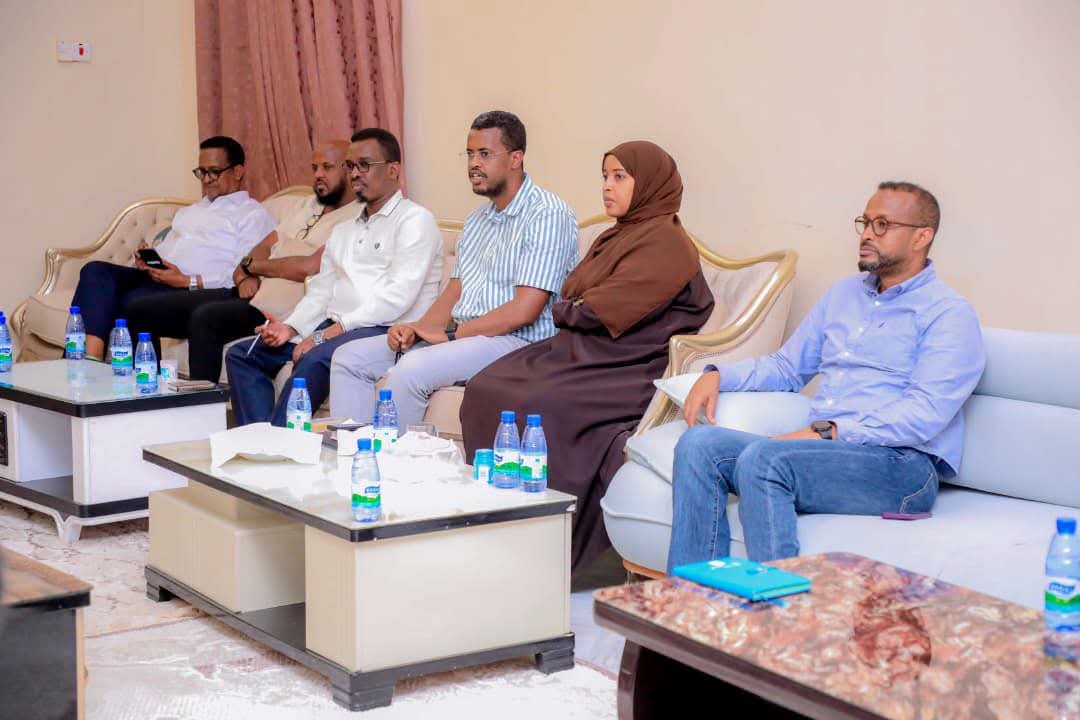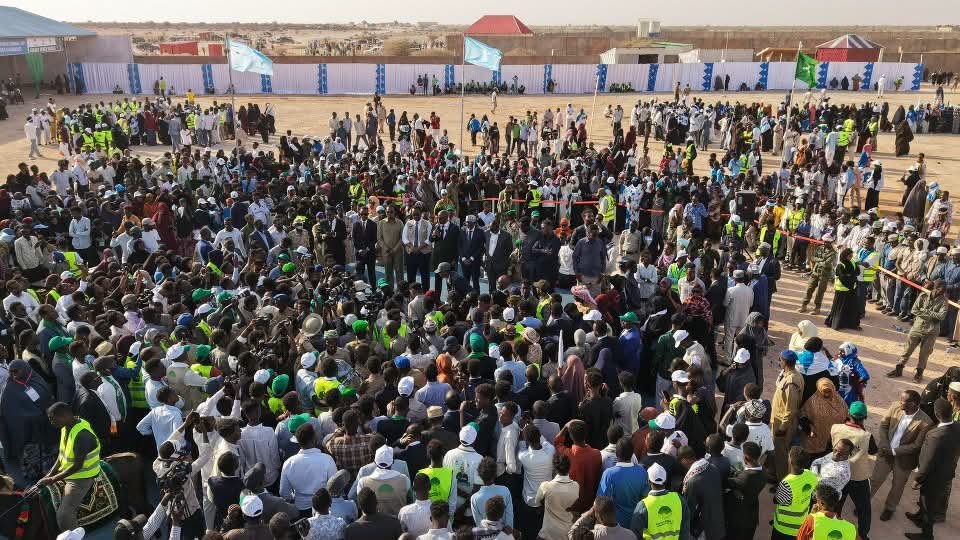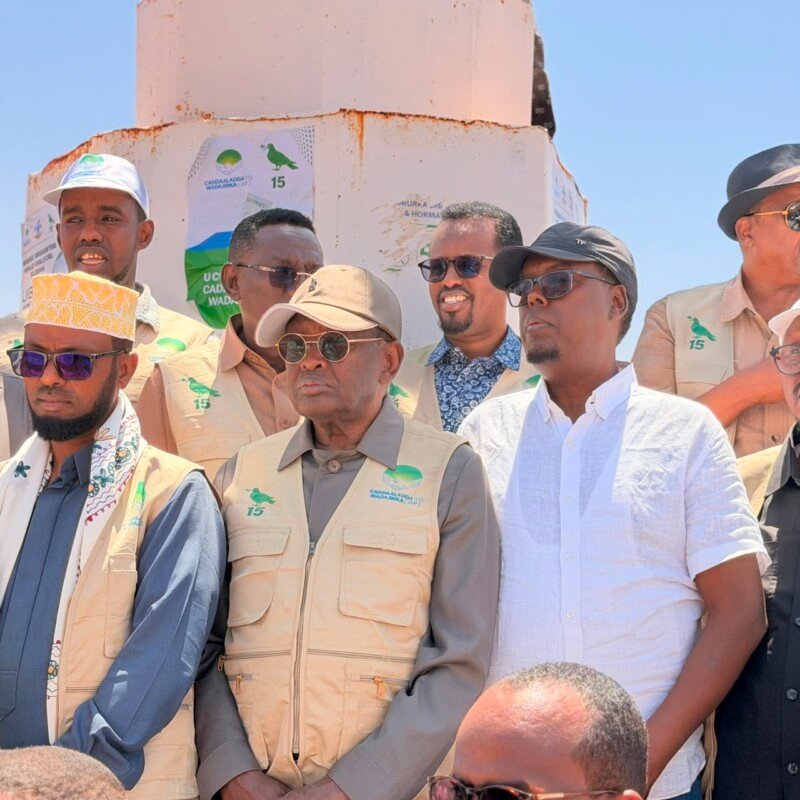
DHUSAMAREB – The Minister of Environment and Climate Change, Bashir Mohamed Jama, has wrapped up a week-long tour of Galmudug State, where he campaigned for the one-person, one-vote electoral process and urged communities to participate in what he described as a historic democratic transition for the region.
The minister arrived in Dhusamareb on July 18 alongside a delegation of federal and regional parliamentarians, and was received by local officials and community representatives. Over the following days, he held meetings with traditional elders, religious leaders, women’s groups, youth organisations, academics and other segments of society in Dhusamareb, Galkayo, Bitaale and Sangaduud.
“The one-person, one-vote election is a victory for the Somali people. It is a day when every citizen freely chooses the leadership they believe in. Every vote cast builds the future of Galmudug and Somalia,” Jama told a gathering in Dhusamareb.
A Democratic Transition or a Federal Imposition?
The minister’s tour coincides with the final stretch of Galmudug’s electoral cycle, which the National Independent Electoral and Boundaries Commission has scheduled for July 20, 2026, with 215,860 voters enrolled across the Galgaduud and Mudug regions. Galmudug is set to become the second federal member state to choose its leadership through a direct one-person, one-vote system, following South West State’s elections in May 2026.
President Ahmed Abdi Kariye Qoor-Qoor had previously declared his administration’s commitment to the one-person, one-vote model, but the transition has been anything but smooth. Qoor-Qoor withdrew from the presidential race following talks with federal officials, clearing the way for the federal government’s preferred candidate. President Hassan Sheikh Mohamud has designated Liban Ahmed Hassan, commonly known as Liban Shuluq, as the sole candidate for the ruling Justice and Solidarity Party (JSP), bypassing internal party competition and raising concerns about the independence of the electoral process.
The minister’s campaign rallies, while framed as civic education, have also served as de facto JSP campaign events. The federal government has designated Liban Ahmed Hassan as its preferred candidate, and the JSP has opened a regional headquarters in Dhusamareb to consolidate its presence. A bitter disagreement between President Mohamud and NISA Director Mahad Mohamed Salad over who should lead Galmudug has exposed deep fractures within the ruling party and raised questions about the legitimacy of the process.
A Tour of Symbolism, Not Substance
The minister’s visits to Bitaale and Sangaduund, where he assessed living conditions and listened to community concerns, were framed as an exercise in grassroots engagement. Yet the tour has been notably light on concrete commitments. No new development projects were announced, no funding pledges were made, and the minister’s primary message was a call to vote for the JSP candidate rather than a substantive discussion of the environmental and climate challenges that his own ministry is responsible for addressing.
Jama, a retired army general who assumed office in 2024, has been a vocal advocate for climate resilience on the international stage, representing Somalia at the UN Environment Assembly and high-level climate meetings in Istanbul. But his domestic tour has focused almost exclusively on electoral politics, leaving little room for discussion of the drought, desertification, and food insecurity that continue to devastate Somali communities.
The communities in Bitaale and Sangaduund, like much of Galmudug, are on the front lines of climate change. Pastoralists have lost livestock to recurring droughts, water sources have dried up, and conflict over natural resources has intensified. Yet the minister’s message to these communities was not about climate adaptation or environmental protection but about political allegiance. “For nearly fifty years, the Somali people have finally found an opportunity to directly elect their leaders,” he told crowds, a message that, while democratic in theory, does little to address the immediate crises facing the region.
The Gap Between Rhetoric and Reality
The minister’s call for democratic participation is commendable in principle, but it sits uncomfortably alongside the reality of a federal government that has imposed its preferred candidate on the region, sidelined political competition, and used state resources to campaign for a single party. Galmudug authorities had previously rejected efforts by the JSP to set up party offices and appoint representatives in districts, deeming the action illegal and contrary to political party regulations. The federal government’s heavy-handed role has fuelled scepticism about whether the election is genuinely democratic or a foregone conclusion.
The minister’s tour reflects a broader pattern in Somali politics: federal officials descend on regional states to campaign for their preferred candidates, using the machinery of government to advance partisan interests while neglecting the substantive governance issues that affect ordinary citizens. The communities of Galmudug deserve more than campaign rallies and political slogans; they deserve investment in climate resilience, economic development, and effective governance.
Way Forward
The minister’s tour of Galmudug has succeeded in generating political momentum for the one-person, one-vote election, but it has done little to address the underlying challenges facing the region. The democratic transition is a significant achievement, but it will be hollow if it does not lead to tangible improvements in the lives of ordinary Somalis. The minister’s next visit to Galmudug should focus less on campaign rallies and more on the environmental and climate challenges that his ministry is meant to address. Until then, the tour will be remembered less as a democratic milestone and more as a missed opportunity.
Recommended Reading On ftlsomalia.com
- Tawfiq Party Chairman Launches One-Person-One-Vote Campaign in Hobyo
- Deputy Minister Al-Cadaala Rallies Galmudug Support for JSP Candidate
- NIEC Releases Official Timeline for Galmudug State Elections
- Galmudug President Qoor-Qoor Withdraws from Presidential Race
- Growing Rift Over Galmudug Leadership at Villa Somalia
- Somali Environment Minister Attends Africa Sustainable Development Forum