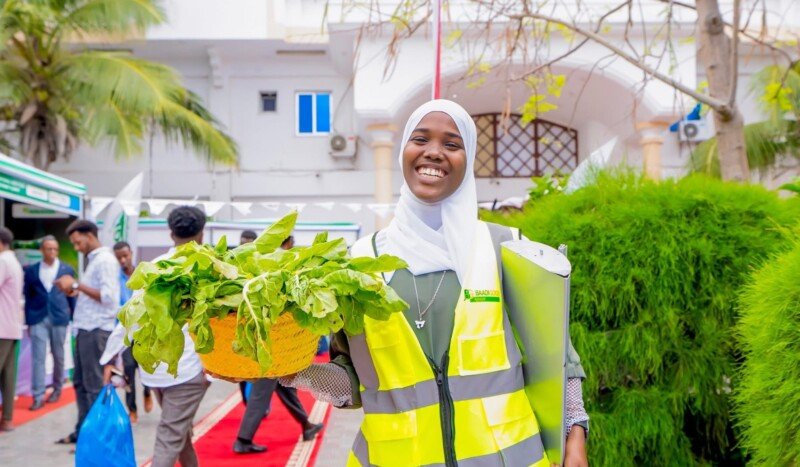
MOGADISHU — The National Food and Agriculture Investment Summit (NAFIS 2026) officially opened in Mogadishu on Tuesday, August 11, 2026, bringing together government officials, private sector representatives, investors, and development partners to discuss agricultural investment, food production, and food security in Somalia.
The forum aims to showcase investment opportunities in Somalia’s agriculture and food sectors, encourage domestic and foreign investment, and promote agricultural production. The event also seeks to build partnerships between the government and the private sector to mobilise funding for food production, job creation, and economic growth.
Somalia’s agriculture sector, which accounts for approximately 60 percent of the country’s gross domestic product, has significant untapped potential but faces persistent challenges from drought, climate change, and conflict. Nearly one-third of Somali households remain food insecure, with internally displaced persons and rural communities bearing the heaviest burden, according to the 2026 Comprehensive Food Security and Vulnerability Assessment.
Prime Minister Hamza Abdi Barre has previously pledged stronger agricultural investment, stating that the government would focus on boosting local food production and reducing reliance on food imports. He has emphasised the need for sustainable agricultural practices and climate-resilient farming to address the recurring food crises that have plagued the country. The Prime Minister has also held talks with the World Food Programme to develop sustainable approaches to persistent food insecurity challenges.
Addressing Somalia’s Food Security Challenges
Somalia faces acute food insecurity, with 6 million people facing crisis levels of food insecurity. The country’s food production has been severely affected by recurrent droughts, erratic rainfall, and conflict, making it heavily dependent on food imports and humanitarian assistance. Nearly 500,000 children face severe malnutrition as drought and funding cuts push Somalia to the brink of catastrophe.
Key areas of focus include supporting smallholder farmers, improving access to agricultural finance, and promoting value addition in the agricultural value chain. The government has launched climate resilience initiatives to support farmers and pastoralists as the country faces persistent droughts and extreme weather conditions.
Minister of Agriculture Mohamed Abdi Hayir (Maareeye) recently concluded a meeting with federal and regional state agriculture ministers, resulting in key agreements aimed at strengthening coordination, enhancing agricultural productivity, and reinforcing national food security. The meeting established a National Agricultural Coordination Framework and a modern system for managing food security data and early warning systems.
The Ministry of Agriculture and Irrigation has launched a food security initiative aimed at supporting smallholder farmers and improving agricultural productivity across the country. The initiative is part of the government’s broader strategy to achieve food self-sufficiency and reduce reliance on imports.
Somalia has launched the EmergenSys project jointly with the Food and Agriculture Organization, leveraging digital systems for emergency preparedness and response to food crises. The initiative uses digital tools including farmer e-registries, e-voucher systems, and early warning mechanisms to improve food security.
Critical Note
While the NAFIS 2026 conference represents a positive step toward addressing Somalia’s food security challenges, the gap between policy aspirations and implementation remains a persistent concern. Despite numerous government initiatives and international commitments, Somalia continues to face severe food insecurity, with millions of people dependent on humanitarian assistance. The WFP has warned that its lifesaving programs could be forced to shut down without immediate funding, as the number of emergency food aid recipients has fallen from 2.2 million in early 2025 to just over 600,000 currently.
The government must also address the structural challenges facing the agricultural sector, including limited access to finance, inadequate infrastructure, and the ongoing conflict that continues to disrupt farming activities. Without sustained investment and political will, the cycle of food crises and humanitarian dependency is likely to continue. The international community, while supporting these initiatives, must also ensure that its assistance is aligned with the government’s priorities and that it builds the capacity of local institutions to deliver sustainable solutions to food insecurity.
Recommended Reading On ftlsomalia.com
- Nearly One-Third of Somali Households Food Insecure
- Somali PM Pledges Stronger Agricultural Investment
- Nearly 500,000 Children Face Severe Malnutrition
- Minister of Agriculture Concludes Meeting on Agricultural Development
- Somali Premier Discusses Food Security with WFP Team
- Somalia Launches EmergenSys Project Jointly with FAO