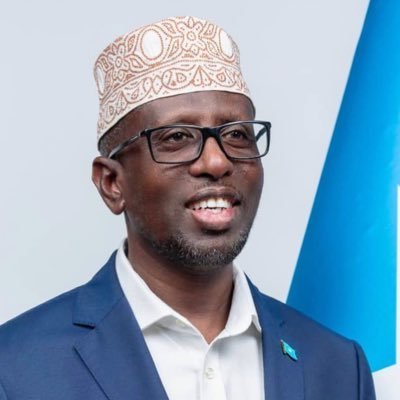
MOGADISHU – Former President Sharif Sheikh Ahmed has issued a stark warning that Somalia could face a collapse similar to Afghanistan’s in 2021 if political divisions and governance failures continue to undermine the country’s campaign against Al-Shabaab. His remarks come as federal parliamentarian Abdirahman Abdishakur also warns that Al-Shabaab could take control of the country if international forces withdraw before Somali security institutions are fully prepared to assume responsibility.
Sharif, who chairs the Somali Future Council, questioned Somalia’s readiness to assume full security responsibility after African Union peacekeepers withdraw, warning that political divisions and corruption could undermine recent security gains. “A serious assessment is needed of the strength of the Somali military and the country’s political and economic situation,” Sharif said.
“Afghanistan Collapsed Because of the Absence of Political Consensus”
Sharif delivered perhaps the most striking comparison of the evening when he argued that Somalia’s political trajectory bears worrying similarities to Afghanistan before the collapse of its internationally backed government. “Afghanistan collapsed because of the absence of political consensus and because corruption hollowed out state institutions,” he said. “Unfortunately, Somalia now faces those same dangers, and in some respects the corruption challenge is even greater.”
The former president warned that Somalia risked repeating the circumstances that preceded the collapse of Afghanistan, arguing that political disunity and corruption pose greater threats than military shortcomings. “If these issues are not addressed, they could weaken government institutions and the military’s power, and the country could be taken over by Al-Shabaab,” he said. Sharif has also warned that elite land grabs are undermining the stability of the state and further weakening citizens’ confidence in government institutions.
Sharif also accused the federal government of diverting security forces from the fight against Al-Shabaab by deploying them to address internal political disputes, saying such actions undermine the military’s effectiveness and weaken national security efforts. He has sharply criticised President Hassan Sheikh Mohamud, whose four-year term expired on May 15, accusing him of violating the constitution after the president insisted his mandate would continue until May 2027. He urged Somalia’s leaders to prioritize political dialogue and national reconciliation, arguing that lasting stability depends on an inclusive political settlement, effective state institutions and security forces capable of independently protecting the country.
Abdishakur: “Al-Shabaab Could Take Over if Foreign Troops Withdraw”
Echoing Sharif’s concerns, federal parliamentarian and opposition leader Abdirahman Abdishakur has warned that Al-Shabaab could take control of the country if international forces withdraw before Somali security institutions are fully prepared to assume responsibility.
Abdishakur has previously accused the government of being distracted by political infighting while Al-Shabaab remains a serious threat. He has warned that the growing resurgence of Al-Shabaab is a direct result of mismanagement, misplaced priorities, and broken trust between the federal government and the Somali people. His warning reflects the same concern: that Somalia’s political class is too consumed by its own rivalries to prepare for the security transition that is now upon it.
A Transition Without a Plan
The warnings come at a time when the African Union Support and Stabilization Mission in Somalia (AUSSOM) is facing an existential funding crisis, with the United States preparing to withdraw logistical support by the end of the year. The Kampala summit, held on July 31, sought to chart a path forward, with African leaders agreeing to sustain AUSSOM for an additional 18 to 24 months while endorsing a phased and coordinated withdrawal. Uganda, which provides the largest contingent of troops with approximately 5,000 to 6,000 soldiers stationed in the country, has already declared its intention to withdraw its forces after nearly two decades.
Al-Shabaab still controls about 30% of Somalia, all in the south-central region, including some districts that it controls directly and some main supply routes between different districts that it controls, where people cannot move freely. The group has for years fought to overthrow the Somali government, which relies on foreign support. The United States has contributed nearly $2 billion to the UN support mission in Somalia but has grown frustrated with what it views as insufficient progress by Somali leaders in assuming responsibility for their own security.
Way Forward
The government has dismissed these warnings as opposition rhetoric, but that does not make them any less valid. The opposition has declared that it no longer recognises President Mohamud’s authority and has warned that it will not allow a power vacuum or unconstitutional rule. The collapse of the Halane talks has left the country in a constitutional vacuum, with both sides holding irreconcilable positions on the president’s term length and the electoral model.
The risk is not that Somalia will experience a lightning collapse like Afghanistan’s, but that it will continue to erode slowly, governance fading, institutions weakening, and trust dissolving, until the state becomes so hollow that its collapse is no longer a shock but an inevitability. The question is whether Somalia’s leaders will heed the warning before it is too late, or whether they will continue to repeat the mistakes that have brought the country to the brink of yet another crisis.
Recommended Reading On ftlsomalia.com
- Ex-President Sharif Warns Somalia Risks Collapse Amid Elite Land Grabs
- Ex-Somali Leader: Hassan Sheikh Stands Where Political Downfall Could Begin
- Opposition Council Warns of Political Crisis as Election Deadlines Loom
- Mogadishu Talks Collapse as Election Deadlock Deepens
- Opposition: President’s Mandate Expires May 15 Without Elections
- As AUSSOM Teeters on the Brink, US Delegation Visits Regional Administrations
- US Faces Critical Choice on Somalia Security Assistance
- Uganda Announces Intent to Withdraw Troops from Somalia